Discover Bavaria privately. With your own chauffeur you visit the finest destinations in and around Munich at your own pace – no fixed departure times, no changes, no coach groups. This page is intended as a planning aid: for each destination you will find the driving time, opening hours, admission prices and an honest note on what can be done in a day – and what cannot.
The top sights in Munich – with opening hours and admission prices
A private city tour with a chauffeur is not a coach tour: you get out where you want, stay as long as you want, and the vehicle waits. Three hours are enough for the Old Town, Nymphenburg and the Olympiapark from the outside; if you want to see museums or the Residenz from the inside, plan five to six hours.
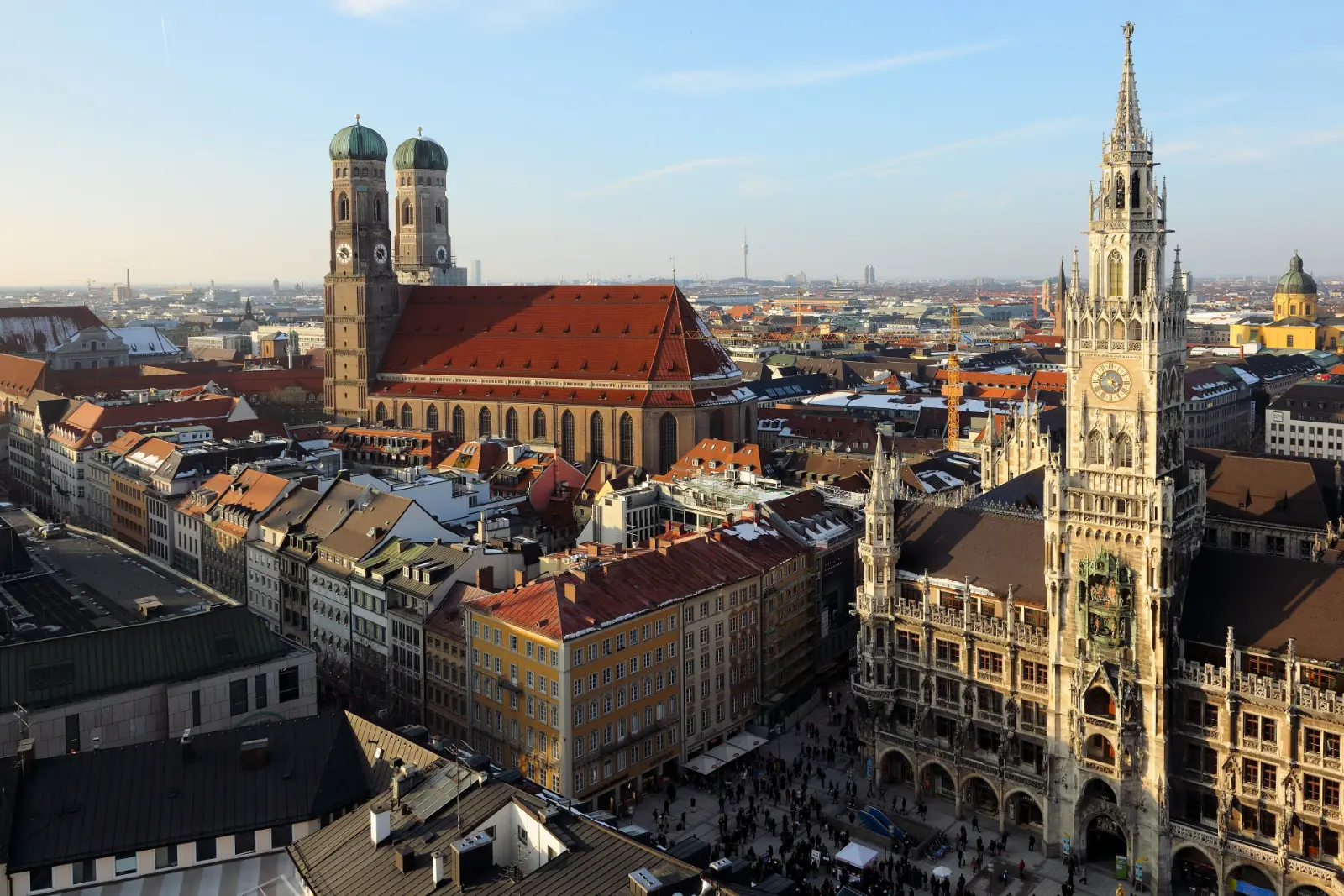
Marienplatz, New Town Hall & Frauenkirche
The New Town Hall (1867–1905, Georg von Hauberrisser) is modelled on Brussels Town Hall; in its 85 m tower the Glockenspiel with 43 bells plays the coopers’ dance (Schäfflertanz) and the knights’ tournament held for the wedding of William V in 1568. Two lifts take you step-free to the viewing platform. The Frauenkirche (foundation stone 1468) with its onion-shaped “Welsche Hauben” domes is the city’s landmark – in the south tower, around 90 spiral steps are followed by a lift up to 98 m.
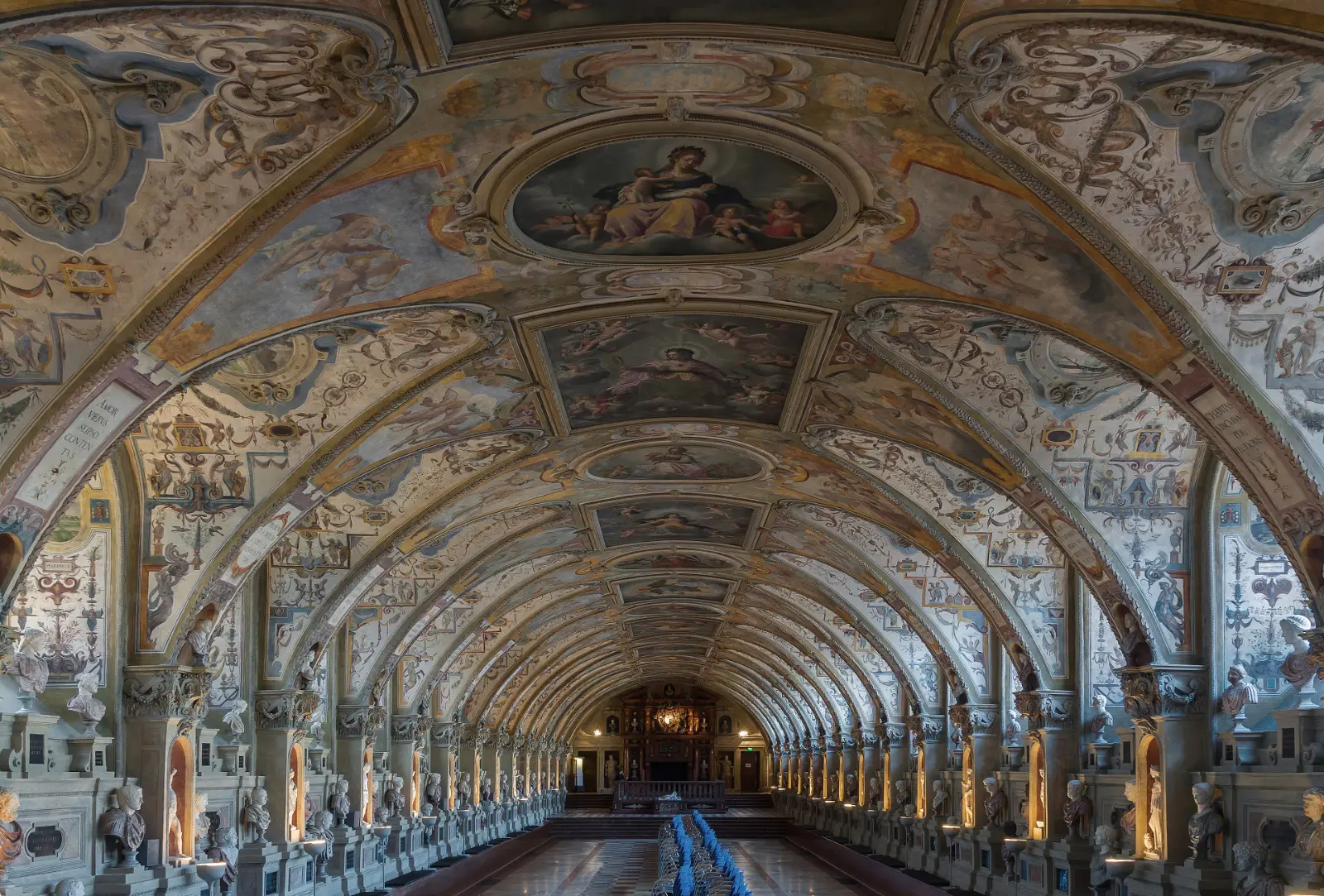
Munich Residenz: Residenz Museum, Treasury & Cuvilliés Theatre
For over 400 years the seat of government of the Wittelsbachs and today one of the largest museums of interior decoration in Europe. Its centrepiece is the Antiquarium, completed in 1571 and almost 66 m long – one of the largest Renaissance halls north of the Alps. The Treasury displays the Bavarian crown insignia, and the Cuvilliés Theatre is regarded as the most important Rococo theatre in Germany. The Hofgarten in front is freely accessible.
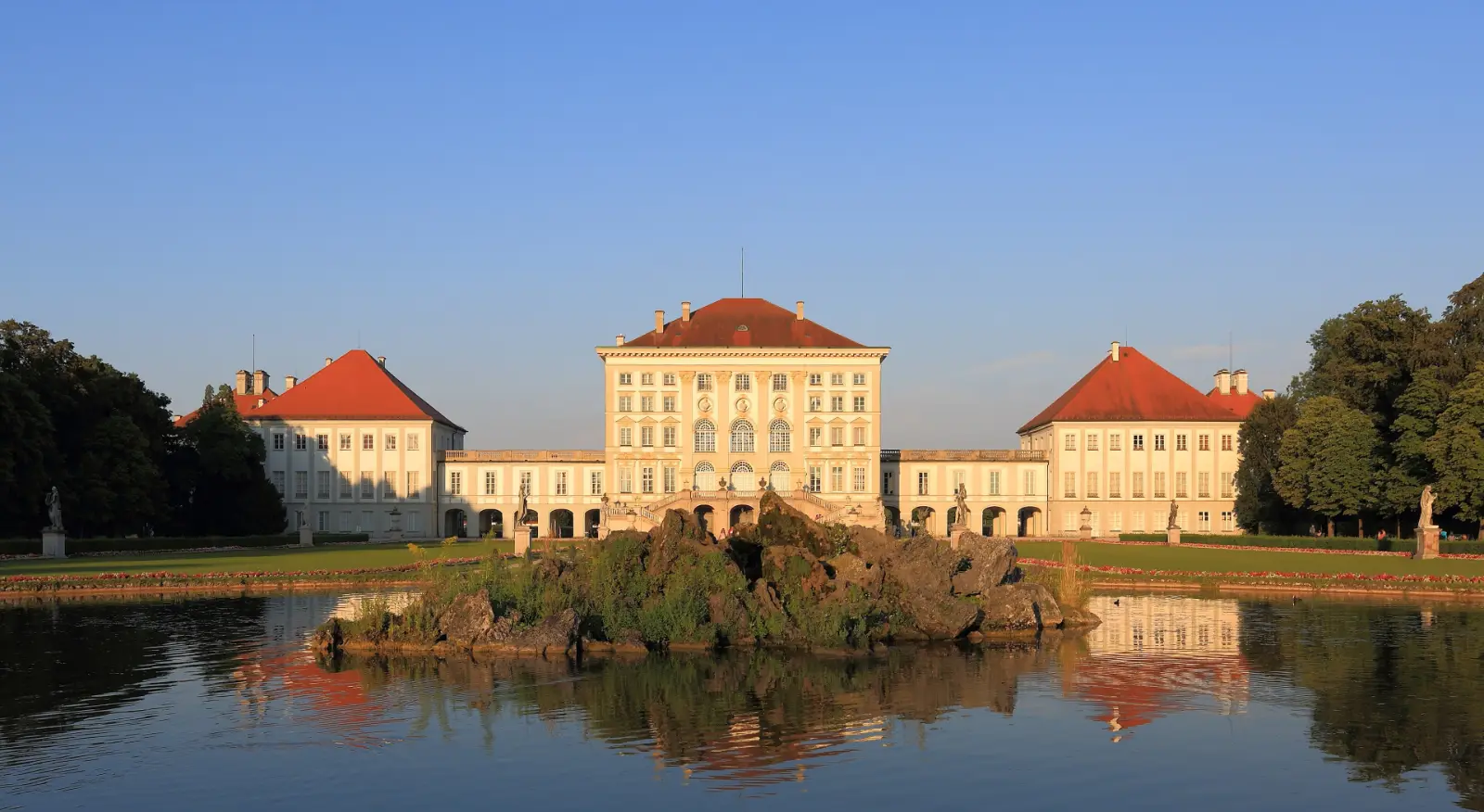
Nymphenburg Palace
The summer residence of the Wittelsbachs, begun in 1664 as a gift from Elector Ferdinand Maria to his wife. The Stone Hall with the ceiling fresco by Johann Baptist Zimmermann has remained unchanged since 1758; the south pavilion houses the Gallery of Beauties of Ludwig I – including Lola Montez. The Marstall Museum shows the coronation coach of Charles VII and the state sleighs of Ludwig II; the 180-hectare park contains the Amalienburg with its Hall of Mirrors, the Badenburg and the Magdalenenklause.
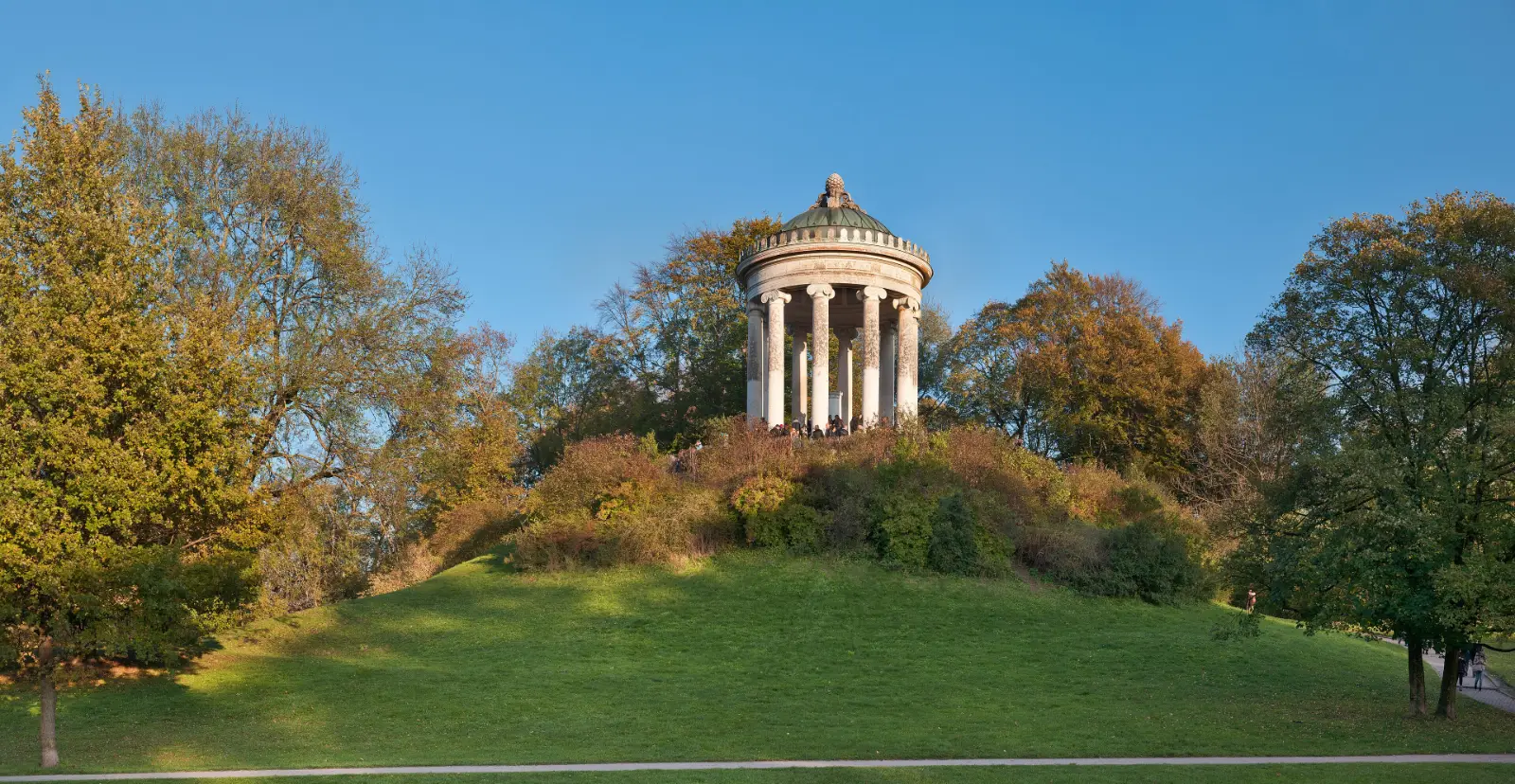
English Garden: Eisbach wave, Monopteros & Chinese Tower
At around 375 hectares one of the largest urban parks in the world, laid out from 1789 to plans by Friedrich Ludwig Sckell. On the Eisbach wave by the Haus der Kunst, Munich locals surf all year round – even in January. The Monopteros (Klenze, 1836) offers the classic view of the Old Town skyline; the Chinese Tower (1790, rebuilt after the war) is the city’s second-largest beer garden with 7,000 seats.
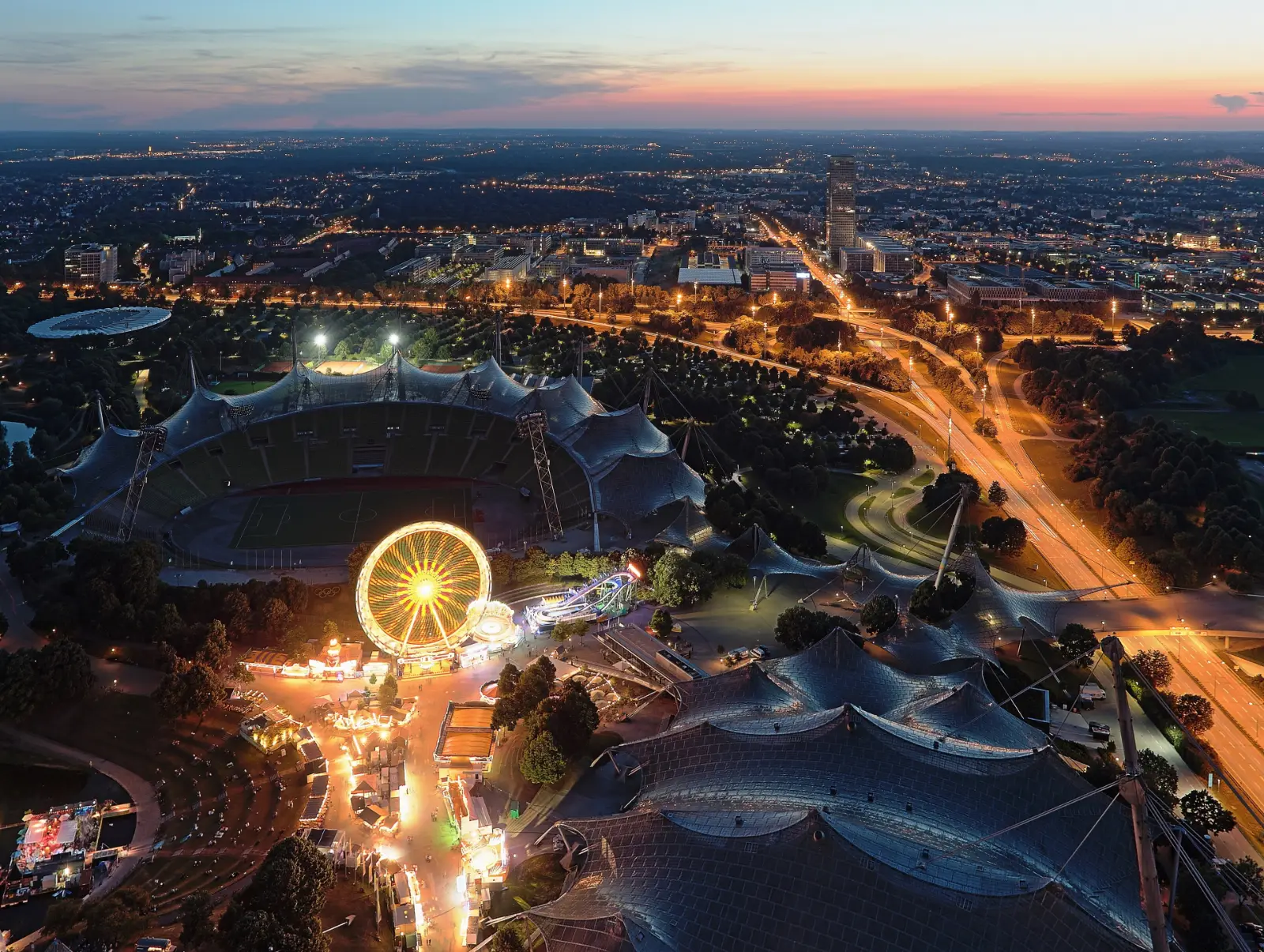
Olympiapark
The site of the 1972 Summer Olympics, with the tent roof by Frei Otto and Günter Behnisch, has been a candidate for UNESCO World Heritage status since 2026. Important for your planning: the 291 m Olympic Tower has been closed for complete refurbishment since June 2024; according to the operator, it is expected to reopen in October 2027. The stadium tour, roof tour and Flying Fox are also suspended until 2029. You can still enjoy the panoramic view – from the Olympiaberg (564 m, free) or from the mobile Skylift.
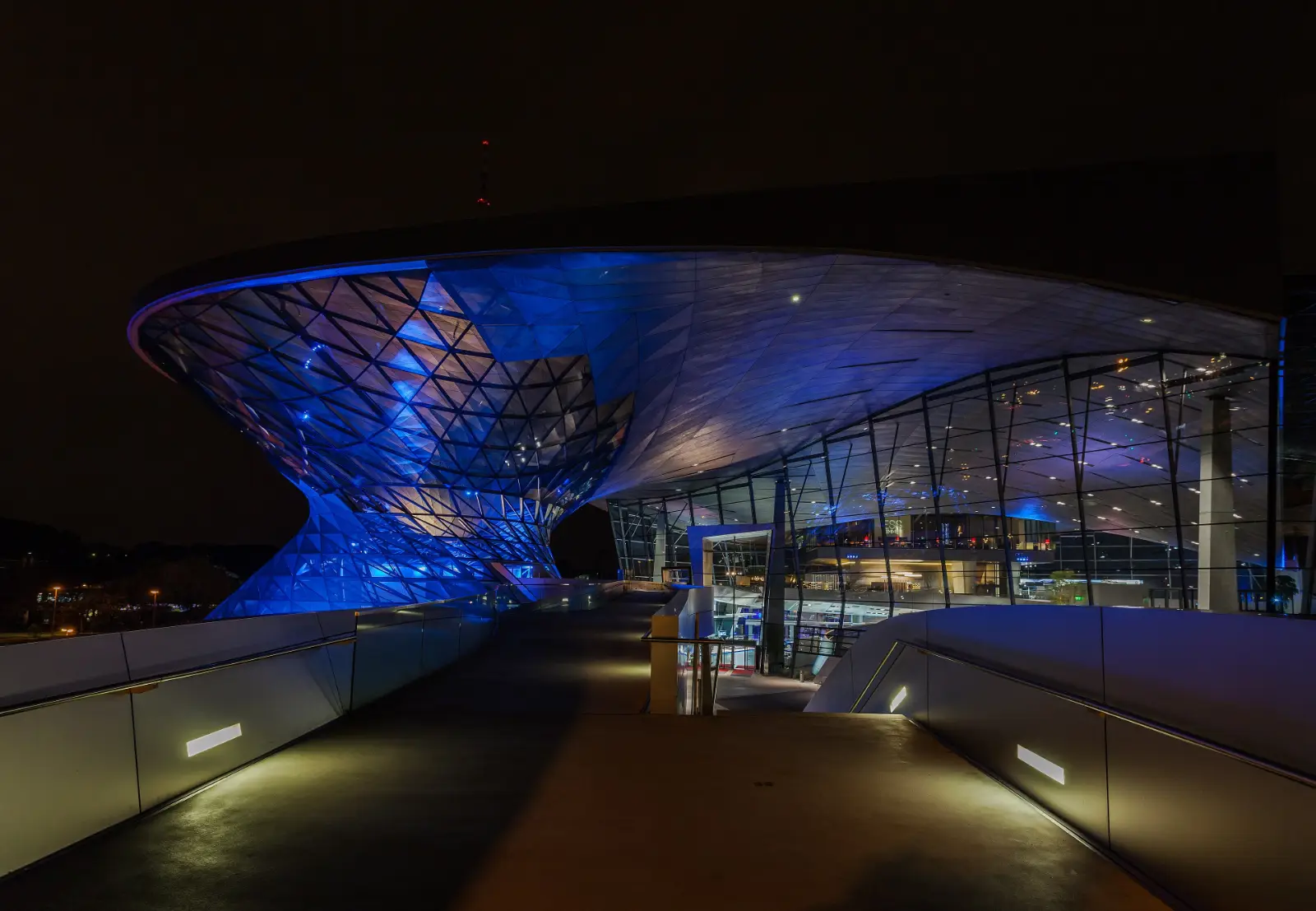
BMW Welt & BMW Museum
Opened in 2007, BMW Welt (Coop Himmelb(l)au) with its striking double cone is both a delivery centre and a brand experience – free of charge, with all current models from BMW, MINI, Rolls-Royce and BMW Motorrad. Opposite stands the BMW Museum from 1973 (the “salad bowl”) next to the listed four-cylinder tower, covering more than 100 years of brand and technology history.
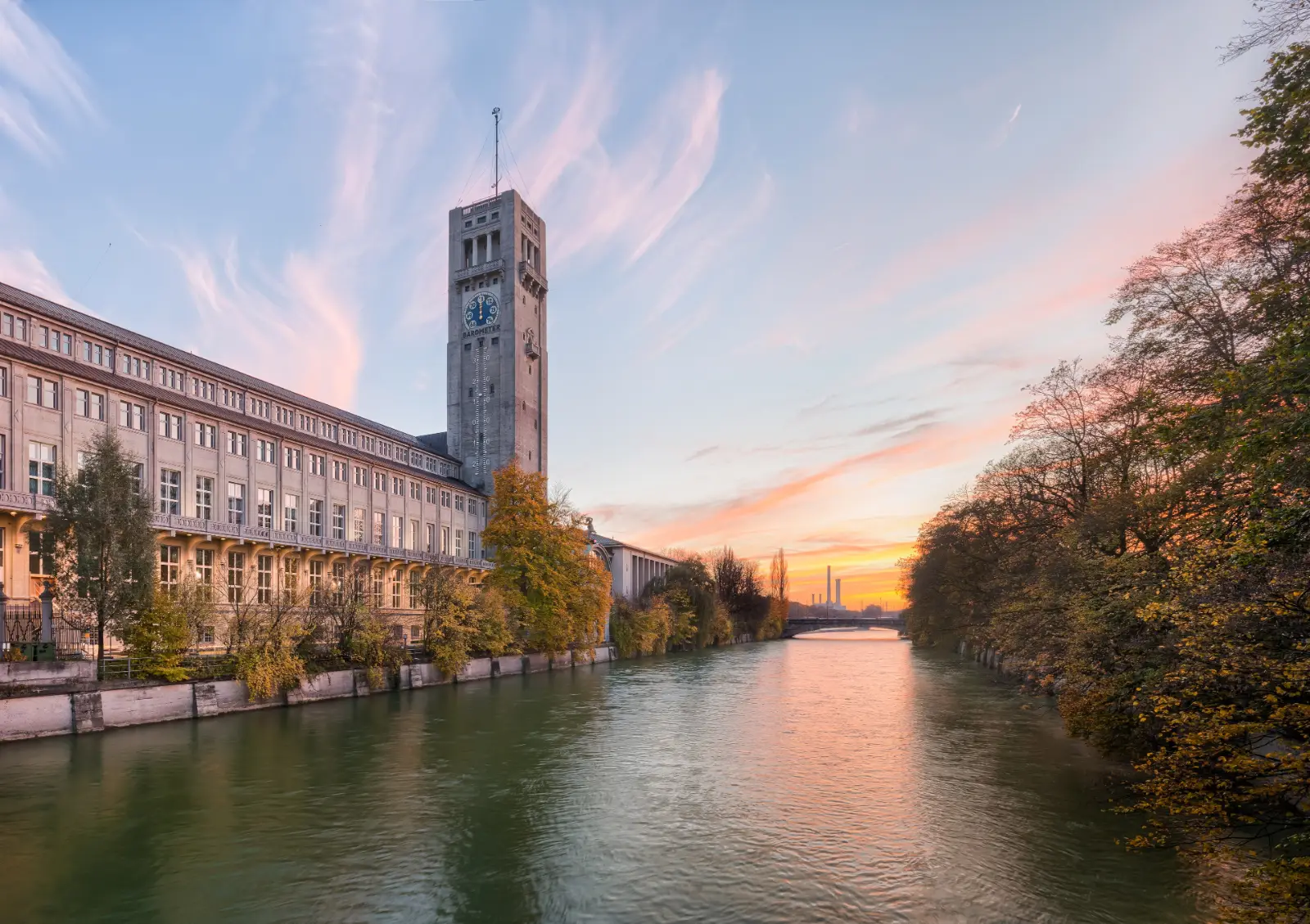
Deutsches Museum
Founded in 1903 by Oskar von Miller, one of the largest science and technology museums in the world. The halls, modernised since 2022, cover aviation and space travel, musical instruments, chemistry and the walk-through replica mine; a further 25,000 m² are due to open in 2028. A museum where children and engineers alike lose track of time.
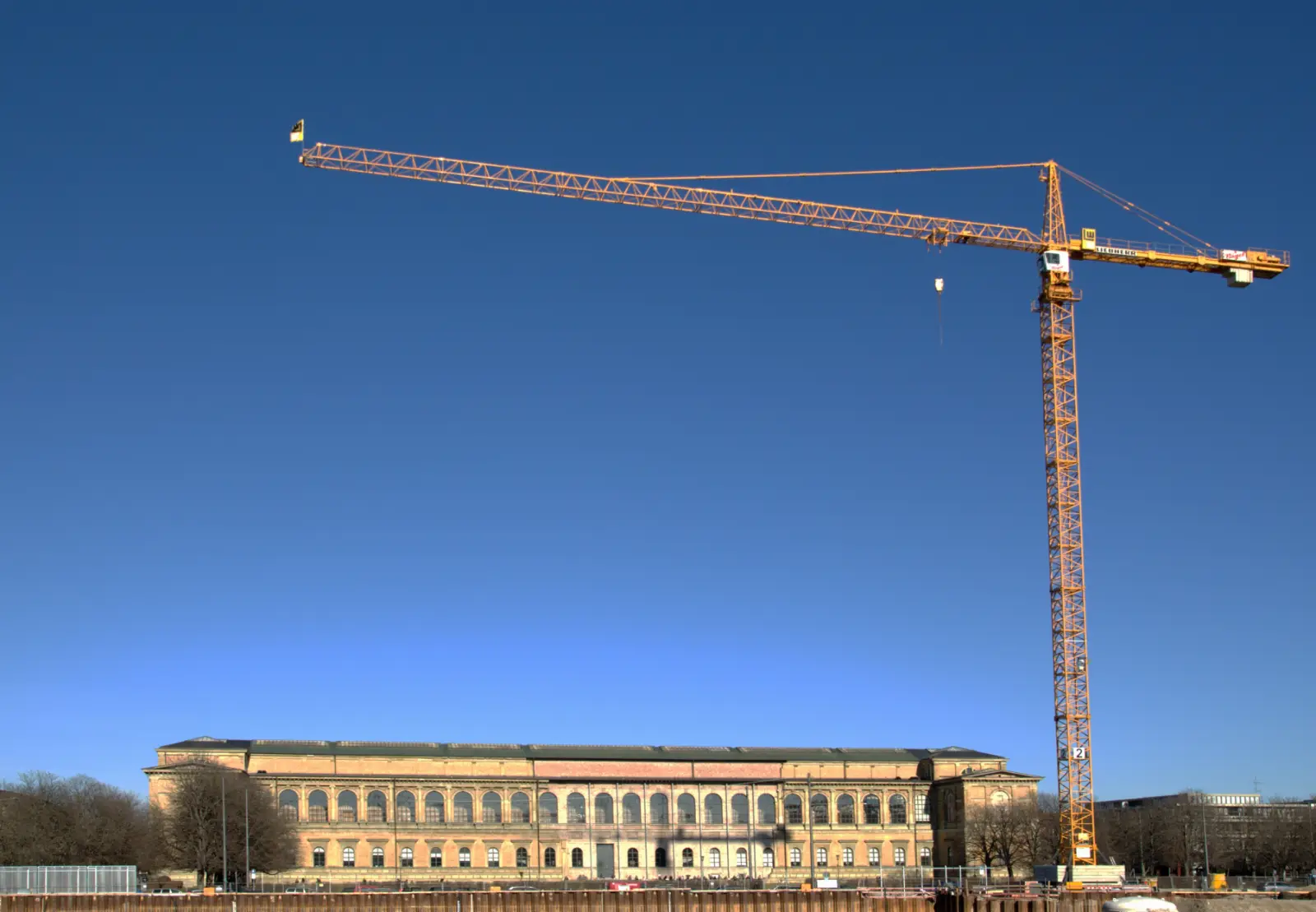
Kunstareal: Pinakotheken, Brandhorst & Lenbachhaus
Within a few hundred metres: the Alte Pinakothek (Klenze, 1836) with Dürer’s Self-Portrait in a Fur-Collared Robe, Altdorfer’s Battle of Alexander and Rubens’ six-metre-high Last Judgement; the Pinakothek der Moderne with four museums under one roof, including the world’s first design museum; the Museum Brandhorst with the largest Warhol collection in Europe; the Lenbachhaus with the world’s largest collection of the Blue Rider (Kandinsky, Marc, Münter). The Neue Pinakothek is closed for refurbishment until approx. 2030 – its main works hang on the ground floor of the Alte Pinakothek.
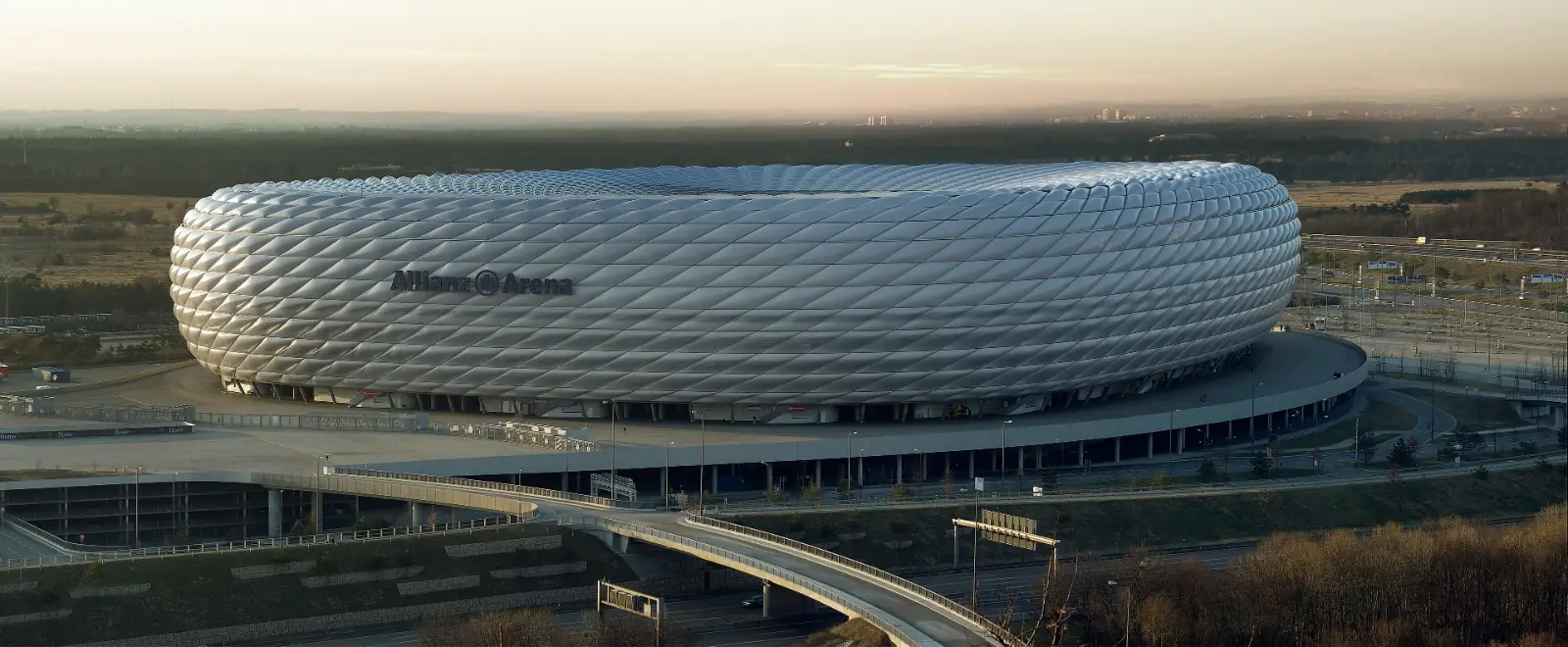
Allianz Arena & FC Bayern Museum
Opened in 2005, the stadium by Herzog & de Meuron holds 75,000 spectators; its shell of 2,874 illuminated foil cushions makes it a landmark in the north of Munich at night. The FC Bayern Museum is the largest club museum in Germany, and the Arena Tour takes you into the dressing room, players’ tunnel and press area. We have a separate page for match days.
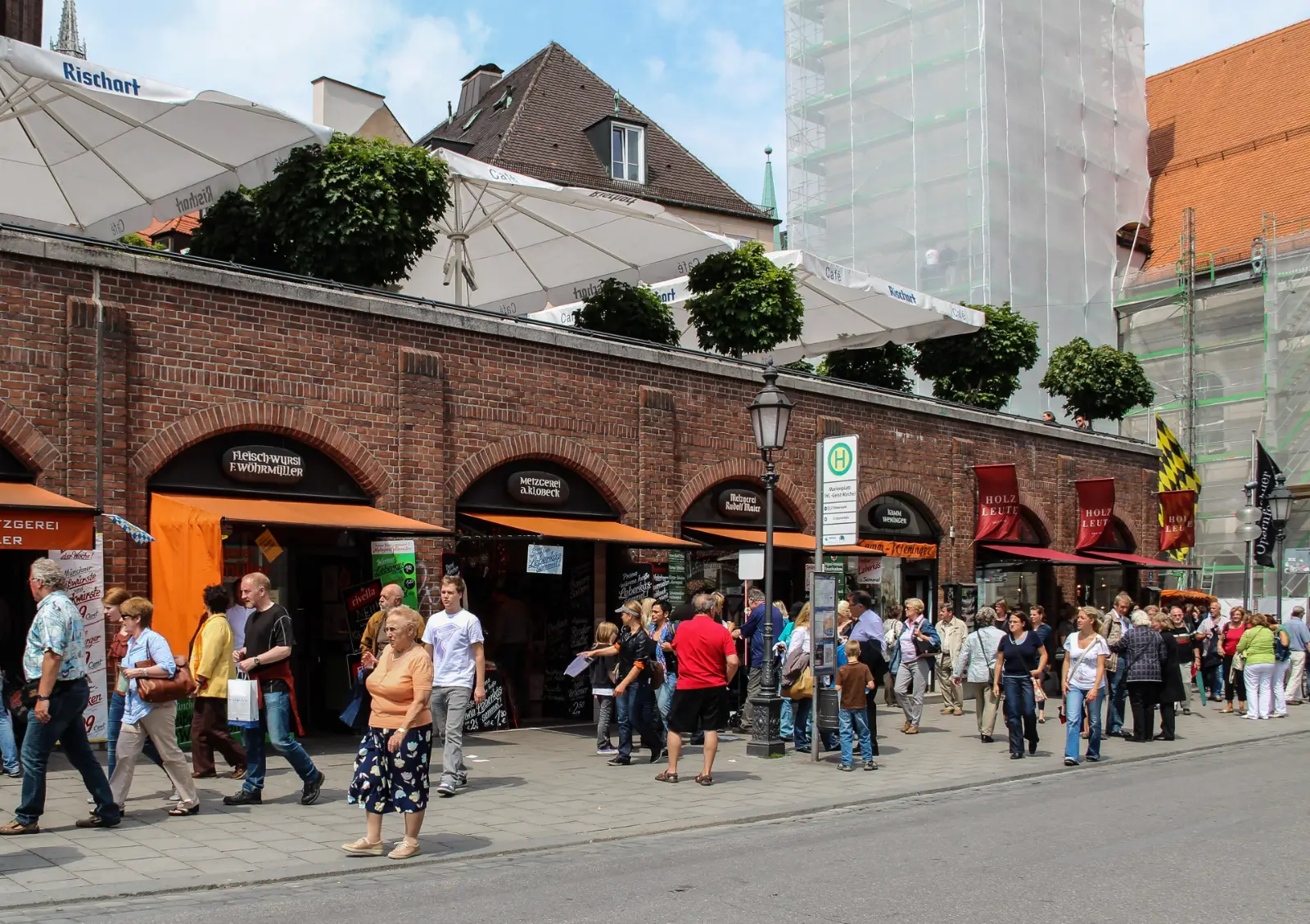
Viktualienmarkt & Hofbräuhaus
The Viktualienmarkt moved to its current location in 1807: more than 100 traders on 18,600 m², six fountains for Munich folk singers such as Karl Valentin and Liesl Karlstadt, and a beer garden where the beer of the six big breweries changes every few weeks – bringing your own snack is allowed. The Hofbräuhaus dates back to Duke William V (1589); the present building from 1897 seats around 1,000 guests in the Schwemme hall, with brass music daily.
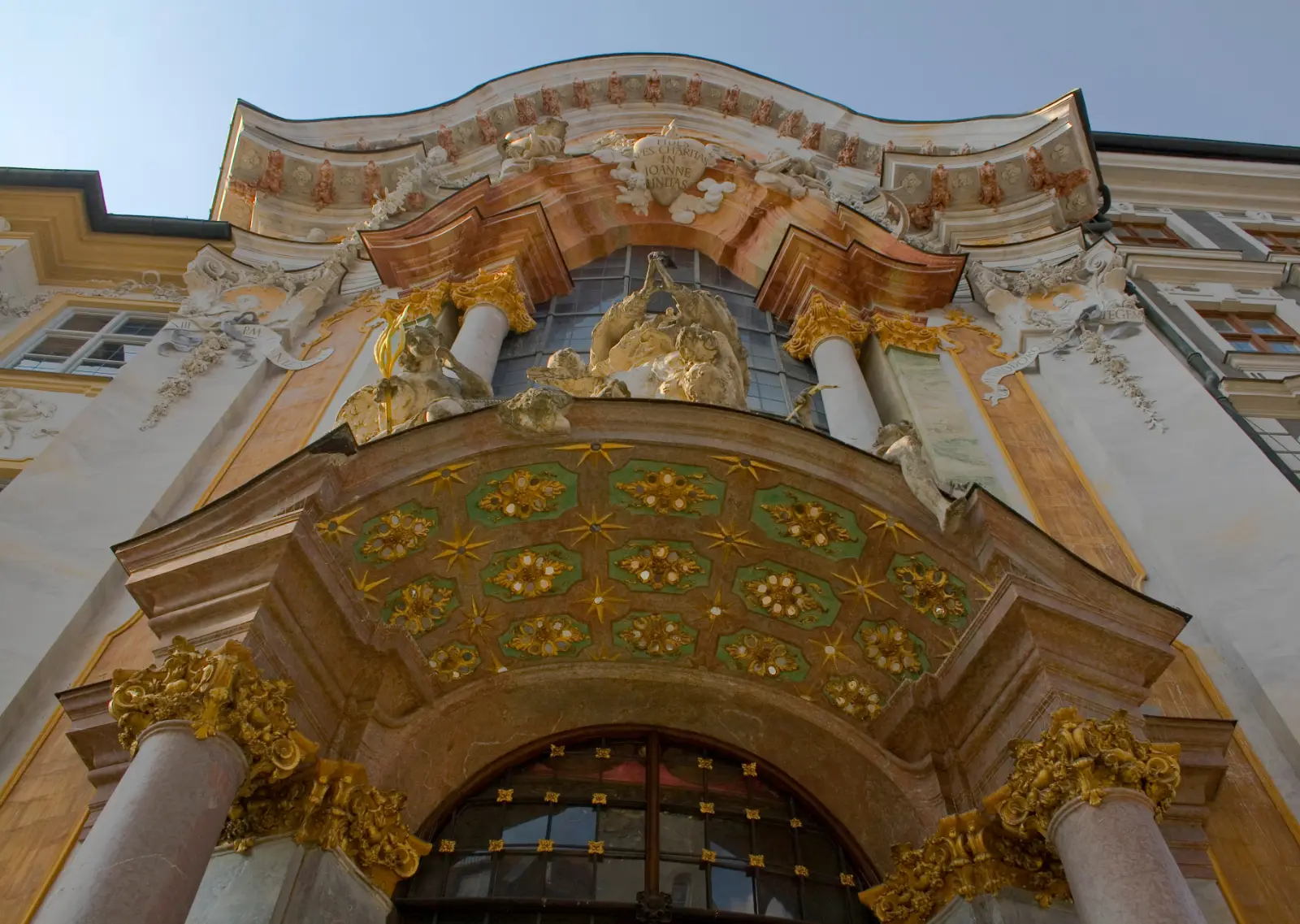
Asam Church & Theatine Church
The Asam brothers built their church in 1733–1746 without a patron, as a private church next to their own house – under public pressure they had to guarantee access for everyone. The interior, only 22 × 8 m, is one of the densest total works of art of southern German late Baroque. The ochre-yellow Theatine Church on Odeonsplatz (from 1663) was Bavaria’s first Baroque church in the Italian style; 49 Wittelsbachs rest in its royal crypt.
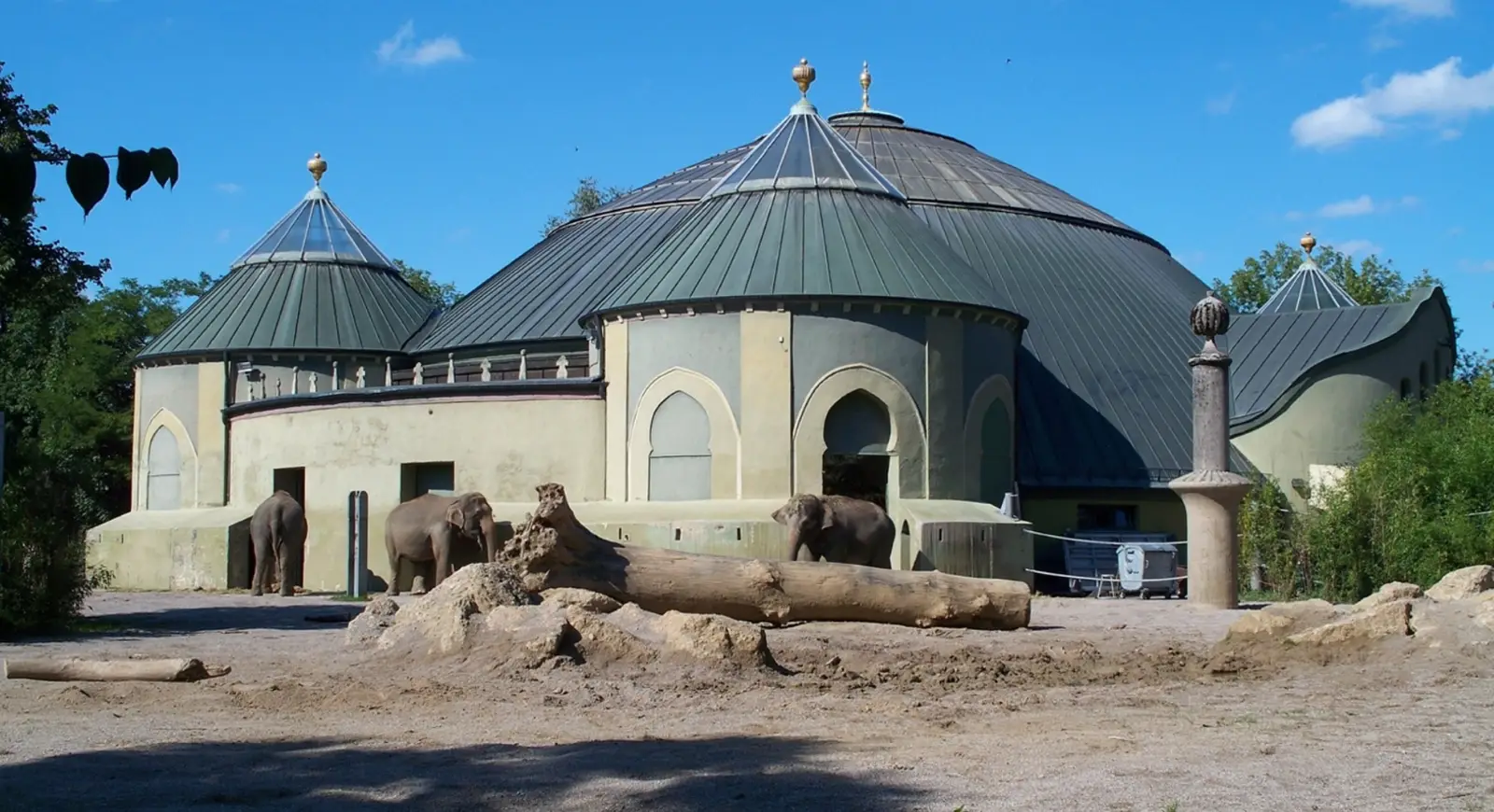
Hellabrunn Zoo
Opened in 1911 and in 1928 the world’s first geo-zoo: the animals are grouped by continent, set in the Isar floodplain. Highlights include the listed elephant house from 1914, the commented feedings of penguins, crocodiles and gorillas, and the keeper talks at the lions and polar bears. For families, this is the destination where a waiting chauffeur makes the biggest difference – parking is scarce.
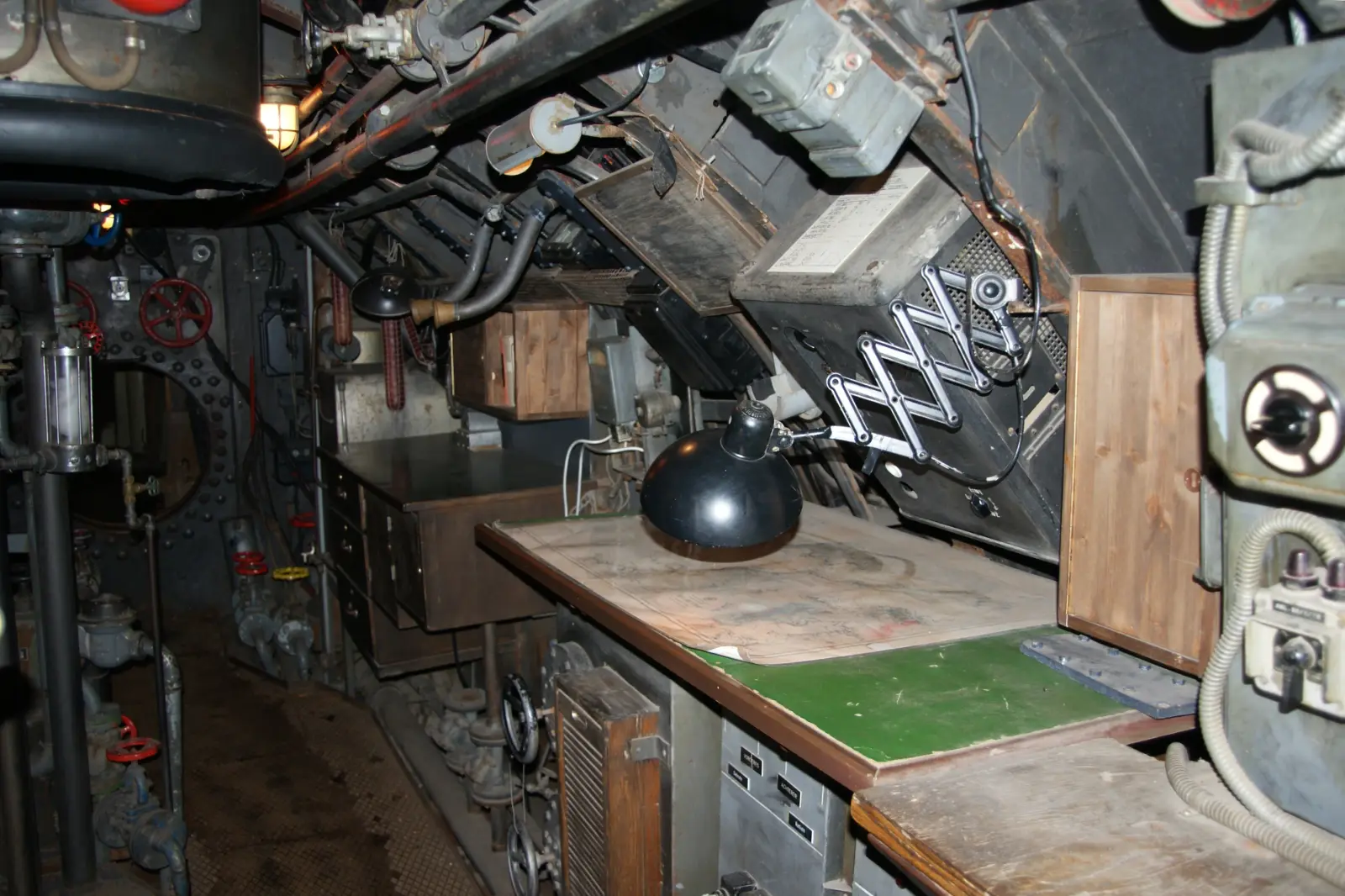
Bavaria Filmstadt
Around 100 years ago, southern Germany’s first film studio was established in Geiselgasteig; “Das Boot”, “The NeverEnding Story” and countless TV series were filmed here. The 90-minute guided tour shows original sets and props, including the U-boat from “Das Boot”; the 4D cinema combines 3D with moving seats.
Royal castles, the Alps, lakes and Salzburg – with driving times, opening hours and prices
All destinations are between 30 minutes and two hours’ drive from Munich. Your chauffeur picks you up at your hotel, waits on site and brings you back in the evening – no searching for parking, no changes. Information as of October 2026; you book admission tickets yourself, and we are happy to give you the links.
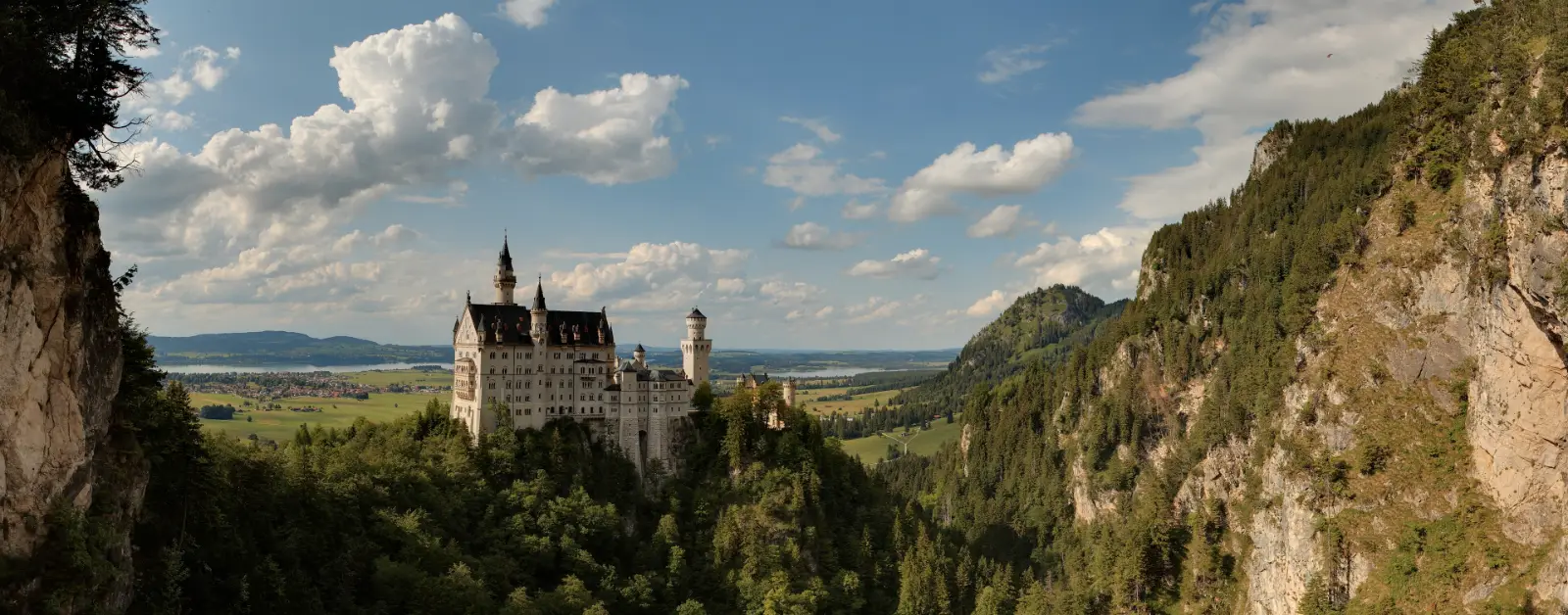
Neuschwanstein & Hohenschwangau Castles
Ludwig II’s fairy-tale castle has towered above the Pöllat gorge since 1869 – unfinished when the king died in 1886, and opened to visitors just seven weeks later. Visitors see the Throne Room, the Singers’ Hall and the private apartments. Opposite stands Hohenschwangau Castle, where Ludwig grew up; from there he could see the building site of his childhood dreams. The classic photo spot is the Marienbrücke bridge above the gorge.
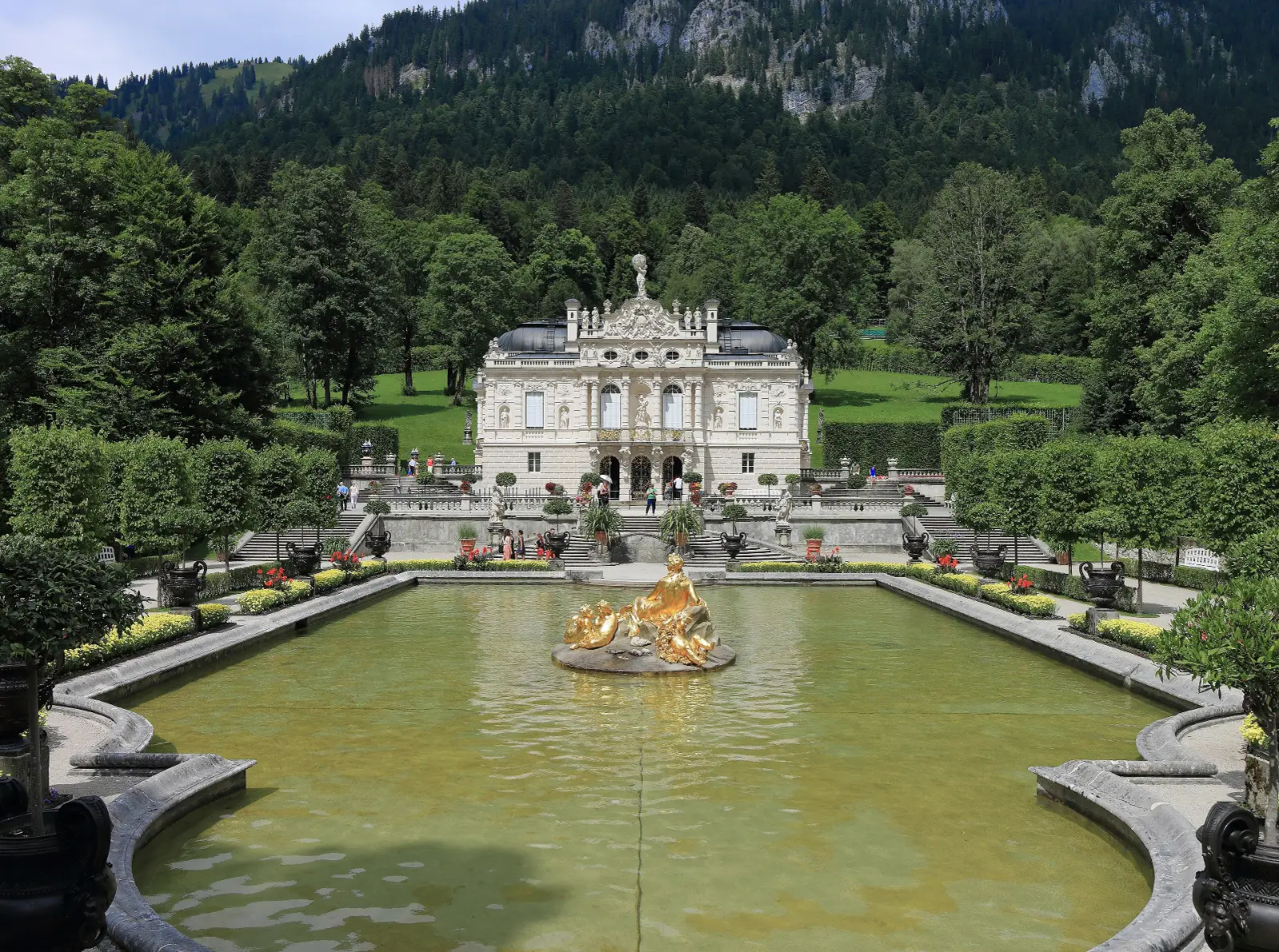
Linderhof Palace, Ettal Abbey & Oberammergau
Linderhof is the smallest palace of Ludwig II and the only one he completed – a Rococo villa in the Graswang valley where he actually lived. It is famous for its retractable dining table (“Tischlein deck dich”) and the artificial Venus Grotto. On the way lies Ettal Abbey with its Baroque basilica, abbey brewery and liqueur, and ten minutes further on Oberammergau with its painted house façades (Lüftlmalerei) and the Passion Play Theatre.
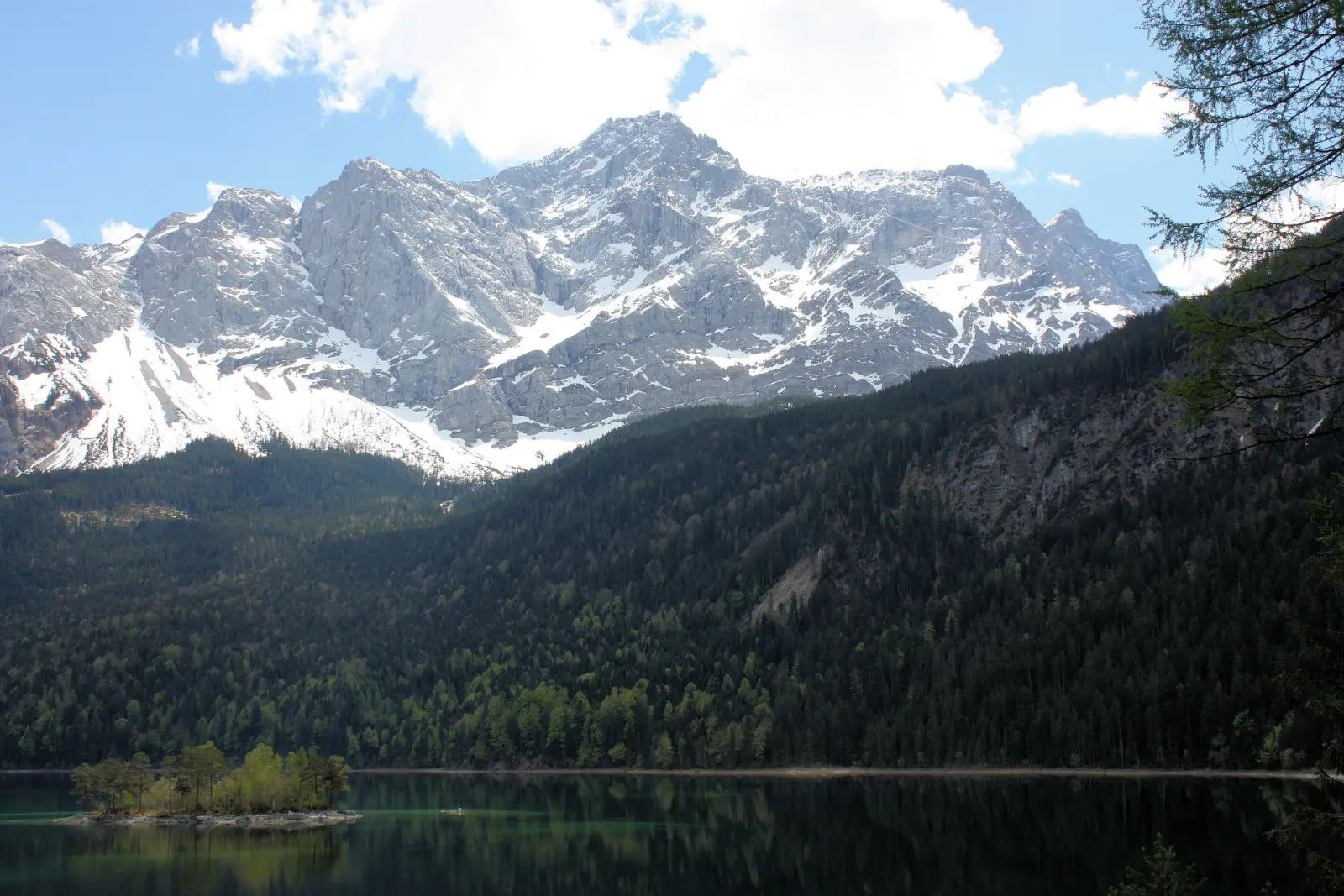
Zugspitze, Eibsee & Partnach Gorge
Germany’s highest peak (2,962 m) can be reached in ten minutes with the Zugspitze cable car from the Eibsee – at 1,945 m it overcomes the world’s greatest difference in altitude in a single section. At the top: a panoramic view of 400 peaks in four countries, and you can walk across the border into Tyrol. The Partnach Gorge in Garmisch-Partenkirchen is a 700 m long gorge up to 80 m deep, with curtains of ice in winter.
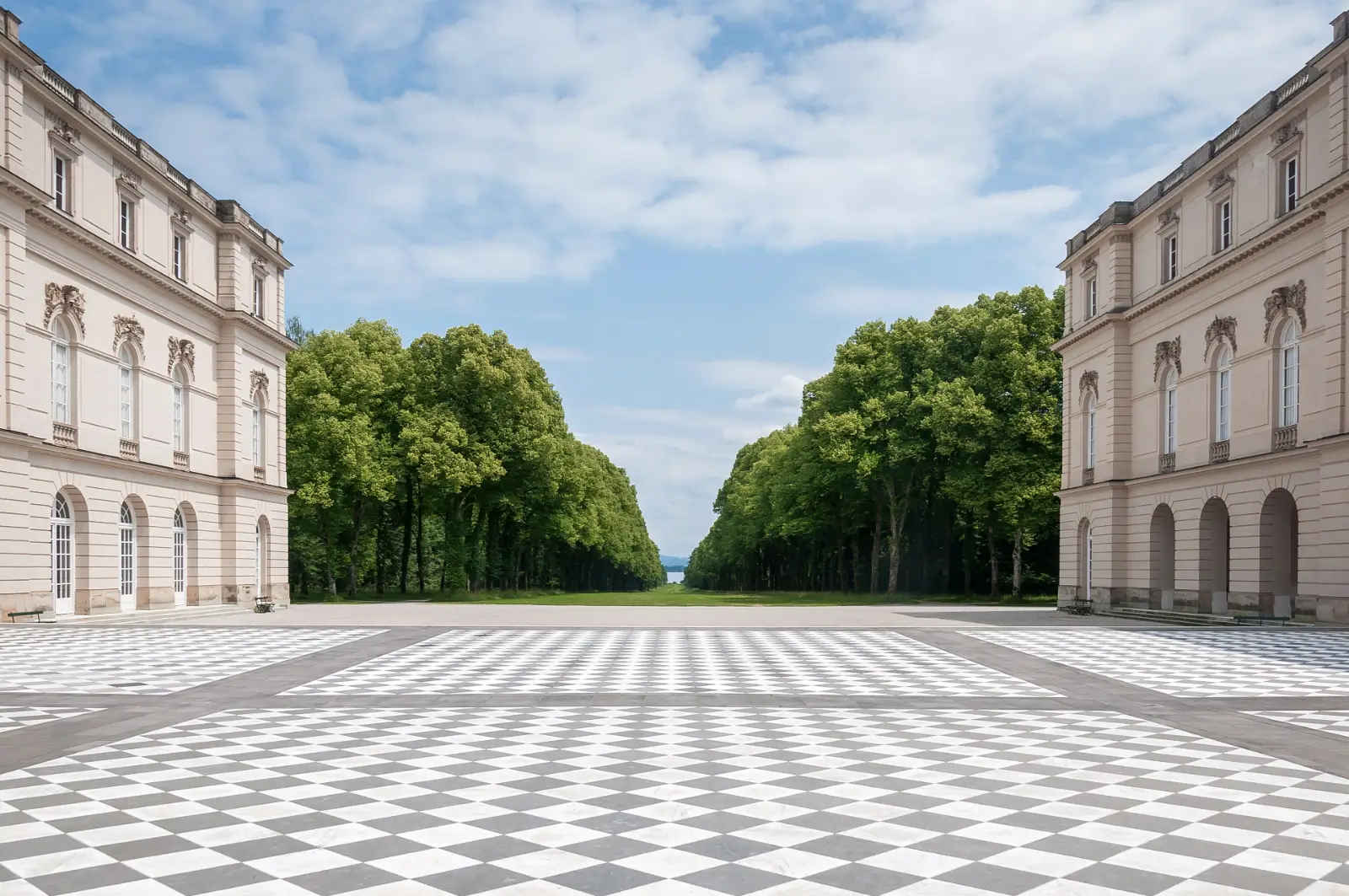
Chiemsee: Herrenchiemsee & Fraueninsel
Ludwig’s “Bavarian Versailles” on the Herreninsel: at 98 m the Hall of Mirrors is longer than the original, the State Bedroom alone cost over 380,000 guilders – only 20 of 70 rooms were completed, and the king lived here for ten days. In 1948 the Constitutional Convention met in the Old Palace. The car-free Fraueninsel with Frauenwörth Abbey (founded 782) is 15 minutes away by boat: fish smokehouses, abbey liqueur, potteries.
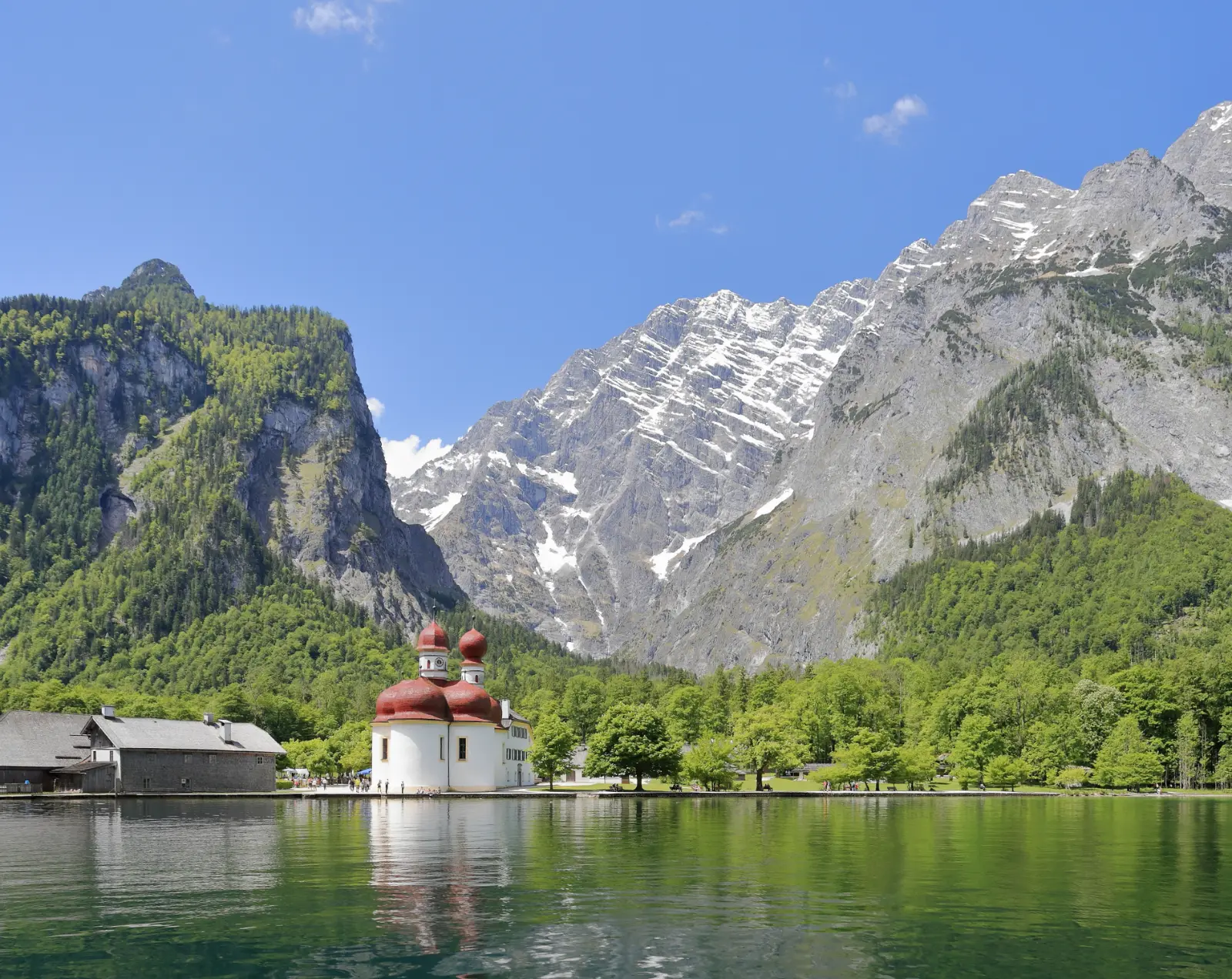
Berchtesgaden: Königssee, Eagle’s Nest & Salt Mine
Since 1909 the fjord-like Königssee has been navigated only by electric boats; at the echo wall the boatman plays the trumpet, and the destination is the pilgrimage church of St. Bartholomä below the 1,800 m Watzmann east face. The Eagle’s Nest (Kehlsteinhaus, 1,834 m) can only be reached by special bus and a brass lift through the rock; in the salt mine (in operation since 1517) you travel by mine train, wooden slides and raft across the mirror lake. The Obersalzberg Documentation Centre puts the site’s Nazi history into context.
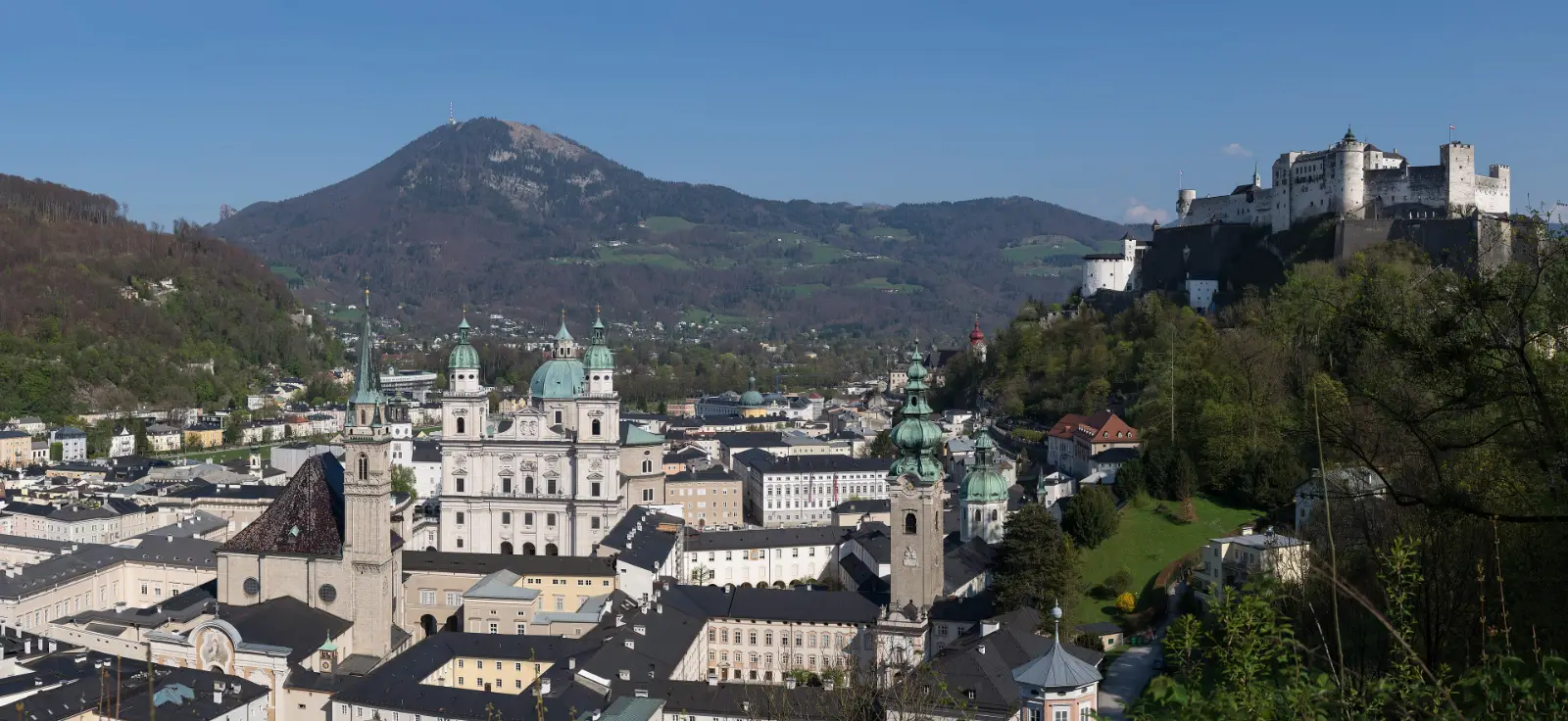
Salzburg: Fortress, Mozart & Hellbrunn
Hohensalzburg Fortress (from 1077) is one of the largest preserved castles in Europe and was never conquered; at the top are the Princes’ Chambers, a marionette museum and the view over the Baroque UNESCO-listed Old Town. Mozart was born at Getreidegasse 9 in 1756 – the museum shows his childhood violin and original letters. The Mirabell Gardens were a filming location for “The Sound of Music”; at Hellbrunn Palace the prince-archbishop’s trick fountains surprise visitors with hidden jets – you will get wet.
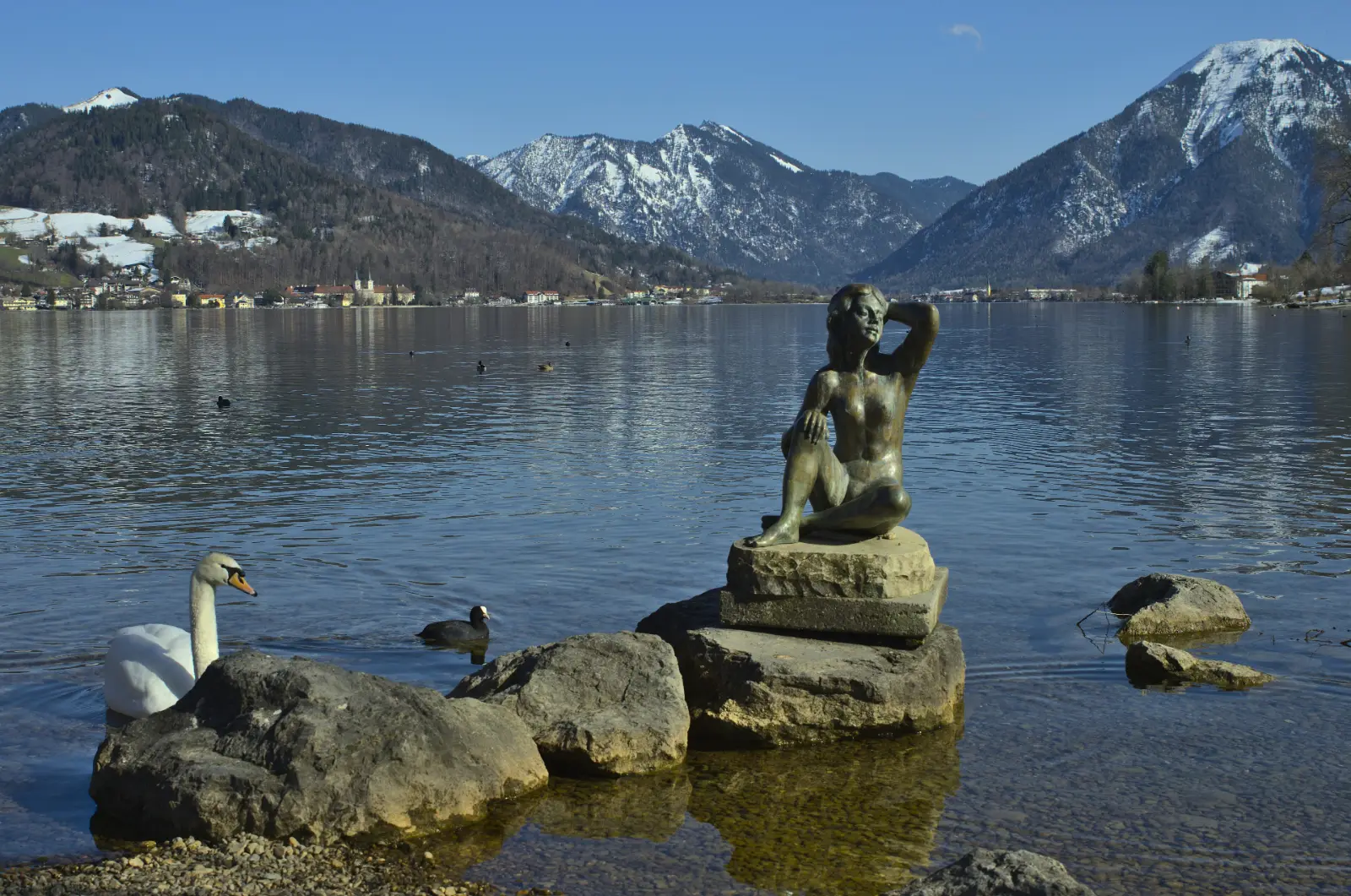
Lake Tegernsee, Schliersee & Spitzingsee
Since 1675 the Herzogliches Bräustüberl in the former Benedictine monastery of Tegernsee has been serving beer from its own brewery right by the lake. The Wallbergbahn cable car in Rottach-Egern takes you up to 1,620 m in 15 minutes, with views as far as the Karwendel; on the north shore in Gmund lies Gut Kaltenbrunn, a 1,000-year-old estate that Feinkost Käfer has converted into an estate restaurant with a beer garden. Schliersee (smaller, quieter) and the high-lying Spitzingsee are 20 minutes further on.
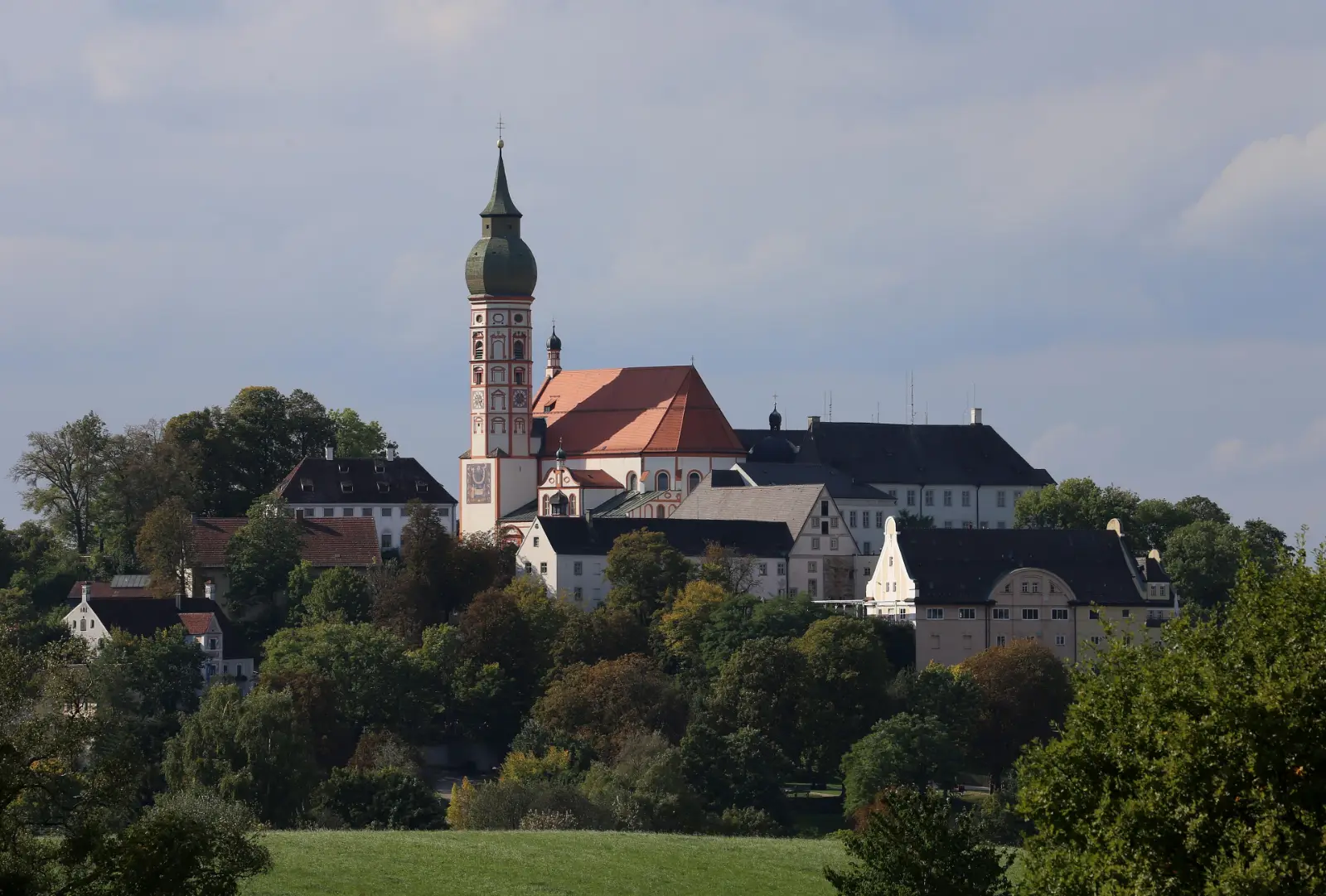
Andechs Abbey, Ammersee & Lake Starnberg
Andechs is Bavaria’s oldest place of pilgrimage (since 1128), high above the Ammersee; Carl Orff is buried in the Rococo pilgrimage church, and the Bräustüberl serves the abbey beer with roast pork in a self-service garden. On Lake Starnberg, the Roseninsel near Feldafing – Ludwig II’s retreat with its casino and rose garden – is an attraction, as is the Buchheim Museum of Fantasy in Bernried – the Expressionist collection of the author of “Das Boot” in a building with a jetty over the lake.
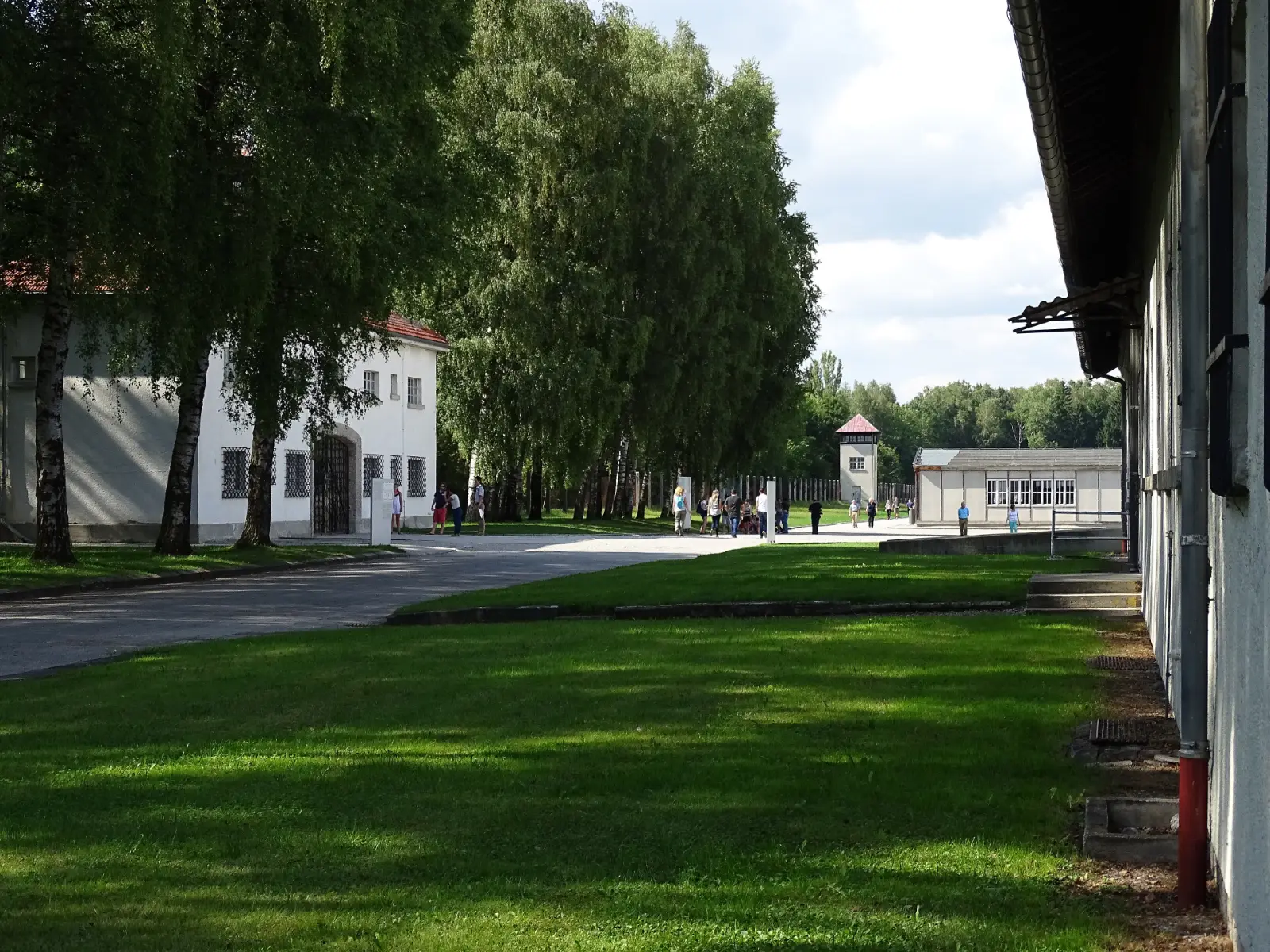
Dachau Concentration Camp Memorial Site
Dachau was the first concentration camp of the Nazi regime (1933–1945) and the model for all later camps; more than 200,000 people were imprisoned here and more than 41,500 died. The tour leads through the Jourhaus with the “Arbeit macht frei” gate, the permanent exhibition, two reconstructed barracks and the crematorium area. A visit that needs time and calm – and for guests from abroad it is often the most important item on their Munich programme.
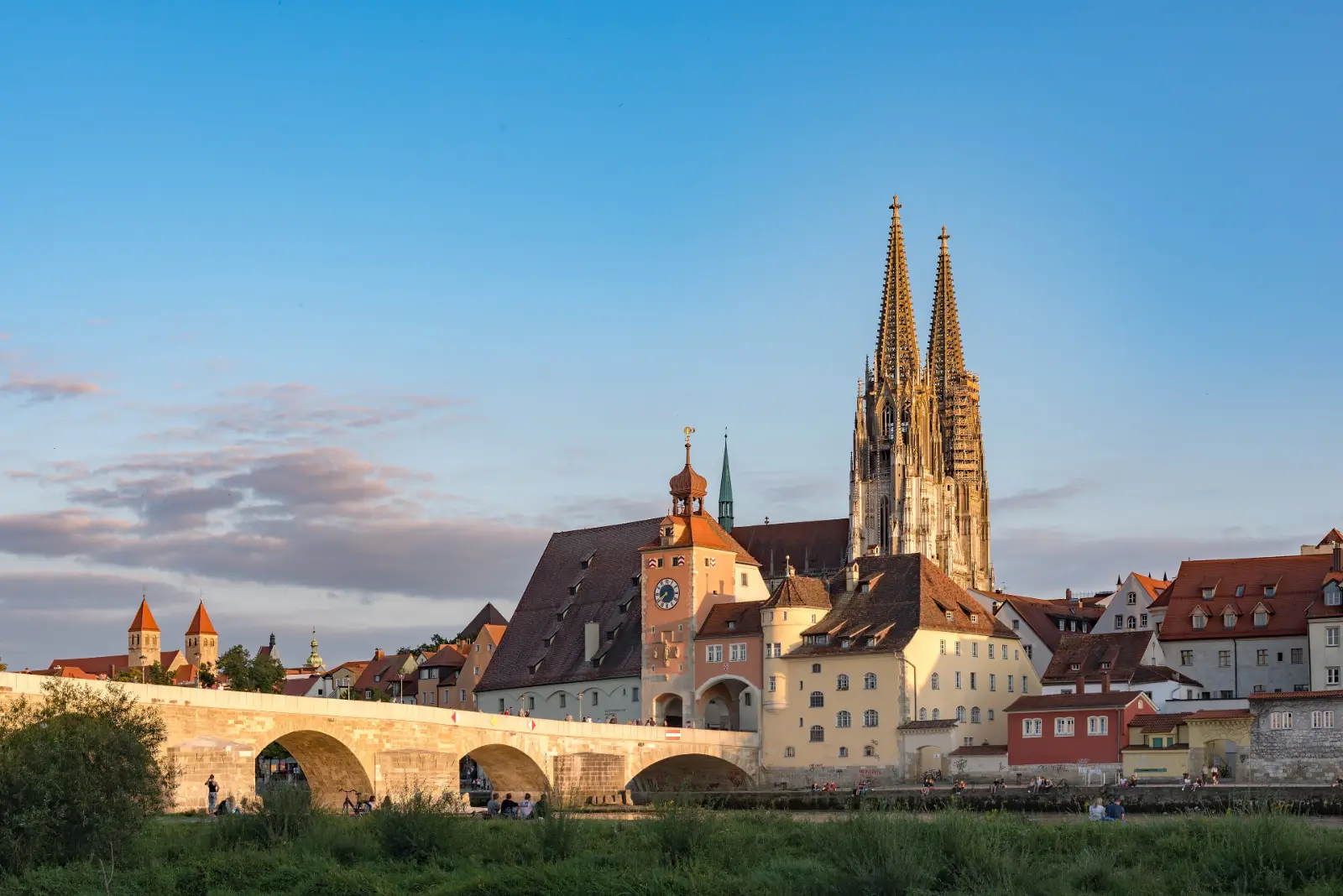
Regensburg & Walhalla
Germany’s best-preserved medieval city (UNESCO since 2006): the Stone Bridge (1135–1146, model for Prague’s Charles Bridge), the Gothic cathedral with the Regensburger Domspatzen choir, patrician tower houses and the Historische Wurstkuchl, which has been grilling sausages on the Danube for around 500 years. Ten kilometres downstream stands the Walhalla – Ludwig I’s marble temple modelled on the Parthenon, with more than 130 busts of notable figures.
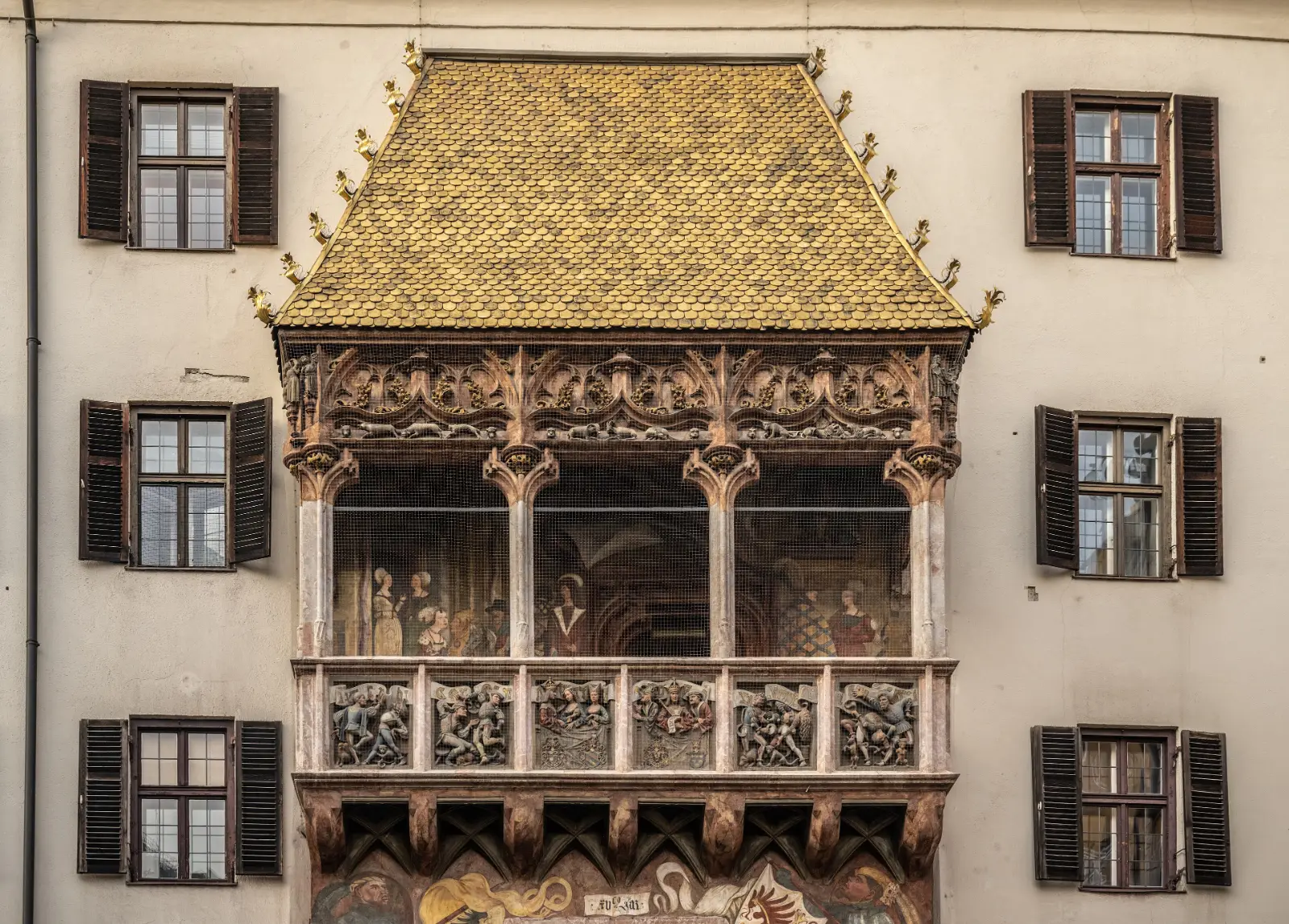
Innsbruck: Golden Roof & Nordkette
Emperor Maximilian I had the Golden Roof with its 2,657 gilded copper shingles added around 1500 so that he could watch tournaments on the town square; behind it are the Hofburg and the Court Church with the emperor’s cenotaph and 28 larger-than-life bronze figures. The Nordkette cable cars start in the middle of the city (stations by Zaha Hadid) and take you up to the Hafelekar at 2,256 m in 20 minutes – with views into the Karwendel and back over the city.
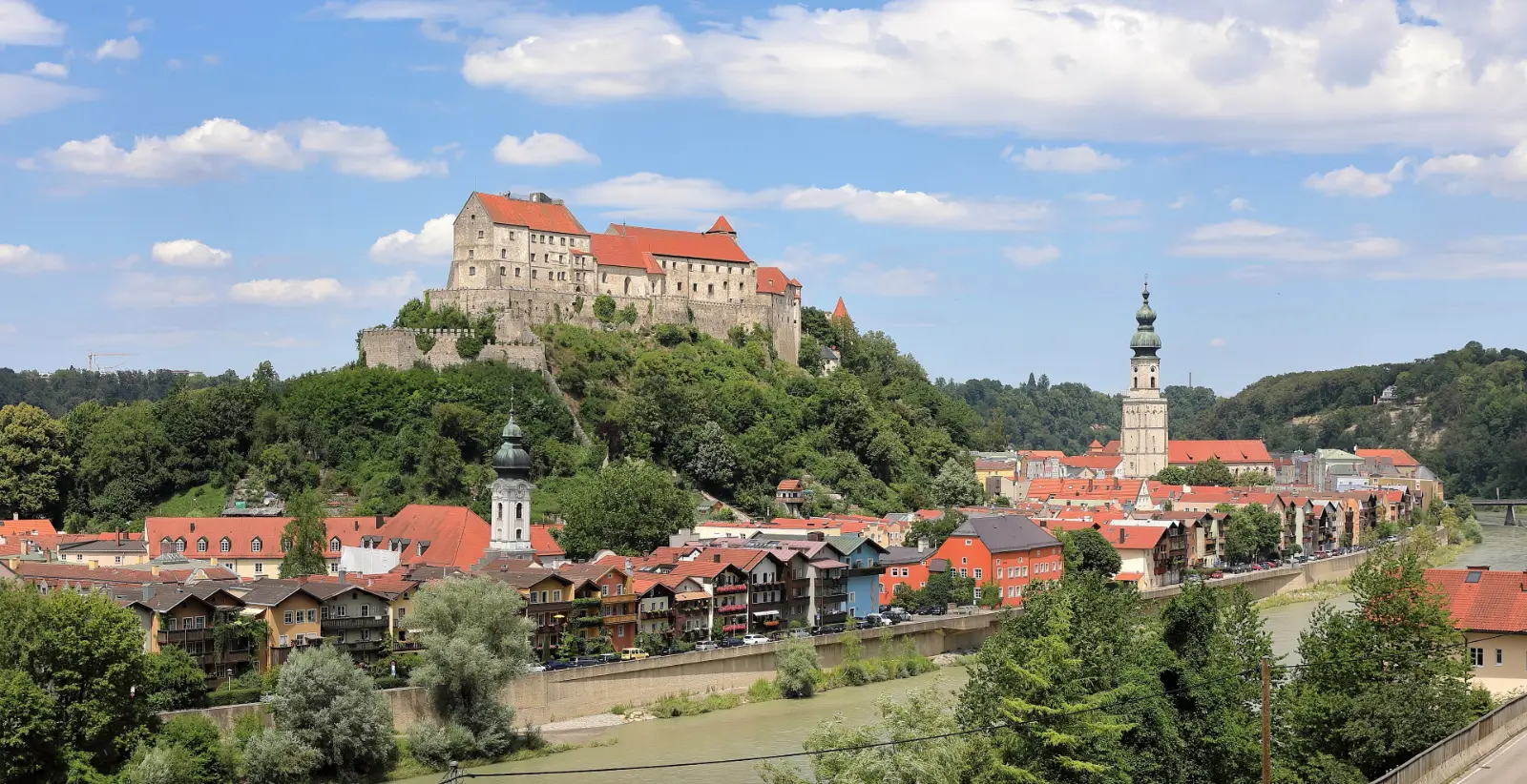
Burghausen – the world’s longest castle
The castle stretches for 1,051 metres along the ridge between the Salzach and the Wöhrsee – according to Guinness World Records, the longest castle complex in the world. The main castle of the Wittelsbach dukes houses the castle museum and the State Gallery with late Gothic painting; the castle grounds are freely accessible, and the colourful old town by the river is one of the most beautiful in Bavaria. Easy to combine with the pilgrimage town of Altötting (20 min).
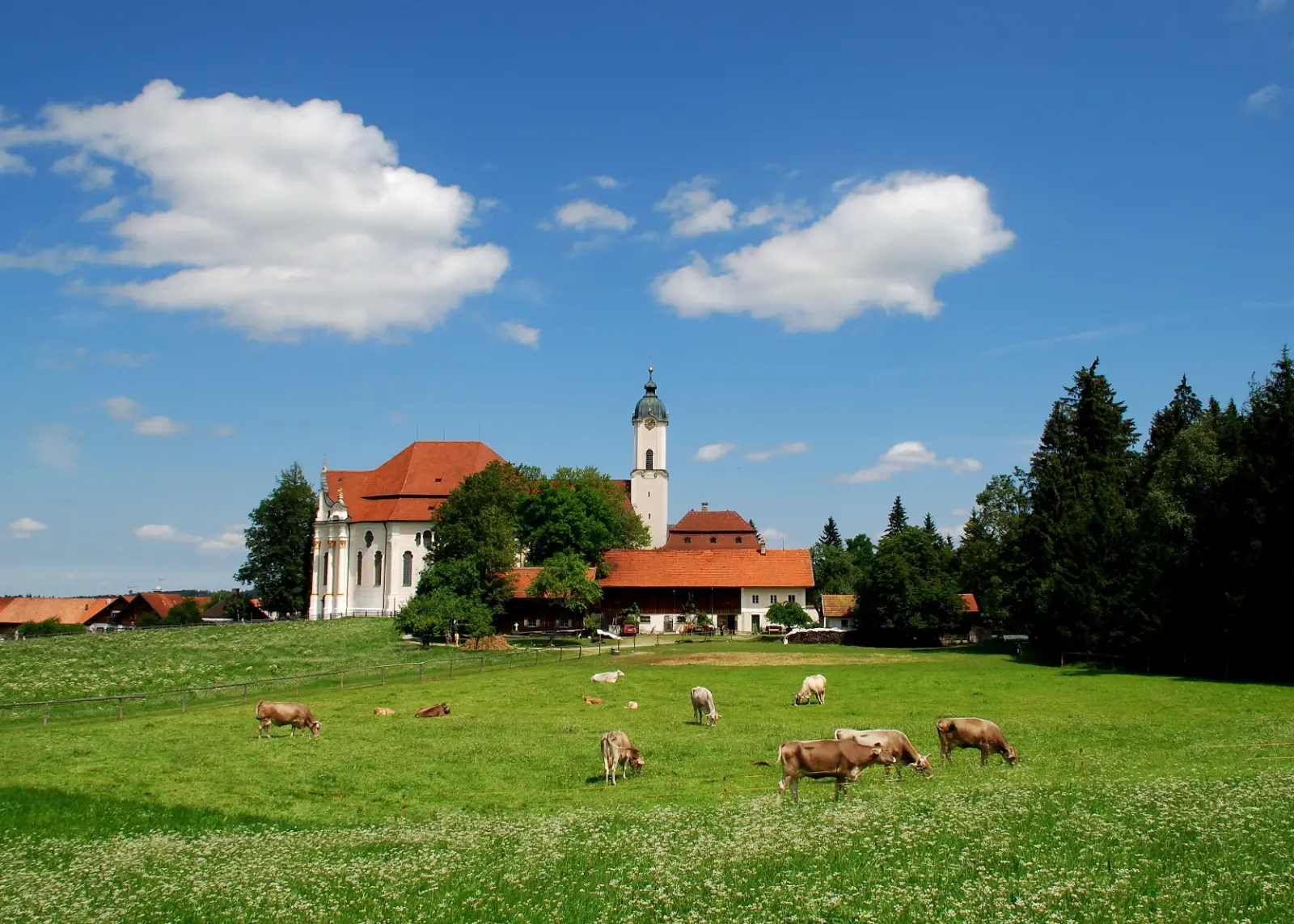
Wieskirche in the Pfaffenwinkel
The Wieskirche (1745–1754, Dominikus Zimmermann) is regarded as the culmination of Bavarian Rococo: a light-flooded oval with a ceiling fresco, built because a figure of the Scourged Saviour is said to have shed “tears” in 1738. A UNESCO World Heritage Site since 1983, free admission – and the ideal stopover on the way to Neuschwanstein, 25 minutes before Füssen.
All opening hours and admission prices: as of October 2026, researched on the official websites of the operators or the Bavarian Palace Administration (2026 price list). Subject to change – please check the linked website before your visit. Driving times are guide values from Munich city centre without traffic jams.
Four tried-and-tested day tours – with a schedule
Realistic itineraries instead of wish lists. All times assume a pick-up in Munich city centre and include buffers for breaks. Every tour can be shortened or combined with a change of hotel.
Royal Castles Tour
- Pick-up at the hotel
- Wieskirche, 30-min stopover
- Hohenschwangau: ticket centre, walk up or shuttle bus
- Neuschwanstein tour (book a time slot online in advance), then the Marienbrücke
- Lunch in Hohenschwangau or Füssen
- Linderhof Palace (with the Venus Grotto in summer)
- Return journey via Ettal and Garmisch
- Arrival in Munich
Alpine Tour Zugspitze
- Pick-up at the hotel
- Eibsee valley station, cable car up the Zugspitze (10 min)
- Summit platform, glacier, lunch on the Platt
- Cogwheel railway down to Garmisch – the chauffeur waits there
- Partnach Gorge (1.5–2 hrs incl. access path)
- Coffee in Garmisch’s pedestrian zone
- Arrival in Munich
Salzburg & Chiemsee
- Pick-up at the hotel
- Prien/Stock, boat to the Herreninsel
- Guided tour of the New Palace of Herrenchiemsee
- Boat back, then on to Salzburg
- Lunch in the Old Town, Getreidegasse, Mozart’s Birthplace
- Fortress funicular and Hohensalzburg Fortress
- Mirabell Gardens, return journey
- Arrival in Munich
Classic city tour
- Pick-up, drive via Maximilianstraße and Odeonsplatz
- Marienplatz on foot: Town Hall, Frauenkirche, Viktualienmarkt (75 min)
- Glockenspiel at 11:00, then on to Nymphenburg
- Nymphenburg Palace, palace tour or park (60 min)
- Olympiapark and BMW Welt (60 min)
- Eisbach wave, walk to the Chinese Tower, beer garden
- Return to the hotel – or extension subject to availability
How to book a trip with a chauffeur
Hourly booking – the flexible option
You book the start time, pick-up location and number of hours; stopovers and waiting times are included, as are 25 km per hour. Prices from €79 per hour. You will find all hourly rates, vehicle classes and the minimum duration on the Hourly chauffeur booking Munich page.One-way transfer at a fixed price
For hotel changes or one-way journeys: Neuschwanstein from approx. €350 (around 125 km), Chiemsee from approx. €255 (around 90 km), Salzburg from approx. €395 (around 145 km). You see the exact price in the booking form before you book – no registration required.Vehicles
Business Green: electric saloon, up to 3 passengers with 3 pieces of luggage. Premium Van (e.g. Mercedes-Benz V-Class) up to 6–7 passengers, ideal for families – child seats are provided. First Class (e.g. BMW 7 Series, Audi A8 or Mercedes-Benz S-Class) for up to 3 passengers, from €150 per hour.Admission tickets
You book tickets yourself – for Neuschwanstein and Herrenchiemsee this must be done in advance with a time slot. Tell us your slot and we will set the pick-up time accordingly. The links to the official ticket shops are listed with each destination.Your chauffeur
Your driver knows the routes, car parks and drop-off points and waits on site. He is a chauffeur, not a certified tour guide – for tours of the palaces, book the in-house guided tours, which are included in the admission price anyway.Closing days & seasons
Monday is the museums’ closing day (Pinakotheken, Lenbachhaus, Brandhorst, BMW Museum, Buchheim). The park buildings at Linderhof and Nymphenburg and the Eagle’s Nest are open in summer only. On Shrove Tuesday and on 24, 25 and 31 December all palaces of the Bavarian Palace Administration are closed.Which destination suits which day?
| Destination | Driving time one way | Total duration | Best season | Adult admission |
|---|---|---|---|---|
| Neuschwanstein | approx. 1 hr 50 min | 8–9 hrs | all year, shorter hours in winter | €21 + €2.50 online |
| Linderhof & Ettal | approx. 1 hr 30 min | 7–8 hrs | 15 April–15 Oct (park buildings) | €18 all-inclusive ticket |
| Zugspitze | approx. 1 hr 30 min | 8–9 hrs | clear days, summer and winter | €78 return trip |
| Herrenchiemsee | approx. 1 hr 10 min | 7–8 hrs | May–October (fountains) | €14 + boat €11.50 |
| Königssee | approx. 2 hrs | 10–11 hrs | May–October (Eagle’s Nest) | boat from €23.40 |
| Salzburg | approx. 1 hr 45 min | 9–10 hrs | all year, especially Advent | fortress from €15.50 |
| Tegernsee | approx. 55 min | 5–8 hrs | all year | Wallbergbahn €28 |
| Andechs & Lake Starnberg | approx. 45 min | 6–8 hrs | April–October (boat trips) | free / museum €13 |
| Dachau Memorial Site | approx. 35 min | 4–5 hrs | all year | free |
| Regensburg & Walhalla | approx. 1 hr 30 min | 7–8 hrs | all year | Walhalla €5 |
| Innsbruck | approx. 2 hrs | 9–10 hrs | all year | Nordkette €56 |
| Burghausen | approx. 1 hr 30 min | 6–7 hrs | all year | 6 € |
Day trips with a chauffeur from Munich
How much does a day trip to Neuschwanstein with a chauffeur cost?
Are admission tickets included in the price?
Is the chauffeur also a tour guide?
How many destinations can we manage in one day?
Can we make spontaneous stops along the way or change the route?
Do you also drive to Austria, Switzerland or the Czech Republic?
Which vehicle is right for a family with children?
Can the trip start or end at the airport?
Related services
Planning a trip?
See the price in the form, no registration required – or send a quick enquiry via WhatsApp.